Blog
-
- April 21, 2026
When a device fails in the field, work does not pause. It stacks up.
Inputs stop registering. Screens struggle in harsh conditions. Batteries drain before the job is done. Small issues quickly turn into delays, rework, and lost productivity.
We cannot afford devices that slow teams down.
Rugged tablets are built to handle these environments, but not all rugged devices are the same.
We walk through what defines a rugged tablet, the difference between 2 in 1 and detachable models, and how to choose the right option for your workflow so you can invest in devices that actually perform where it matters.
-
- April 20, 2026
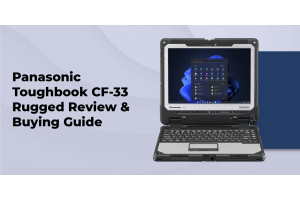
A Panasonic Toughbook is a military-grade rugged laptop engineered to withstand extreme conditions that destroy standard computers. Unlike consumer laptops, every Toughbook undergoes rigorous MIL-STD-810G/H testing, including 6-foot drop tests, extreme temperature exposure (-20°F to 140°F), vibration resistance, dust ingress protection, and water resistance testing for fully rugged models. These aren’t marketing claims; they are certified military standards proven in combat zones, disaster sites, and the harshest industrial environments worldwide.
-
- April 19, 2026
You're parked at a truck stop outside Amarillo. Your ELD log needs to be submitted before you can legally roll again. You open your laptop, the same one that worked fine three weeks ago in your apartment, and nothing happens. Black screen. Dead. The vibration from 1,400 miles of highway finally finished it off.
-
- April 12, 2026
When buyers compare devices for demanding jobs, durability claims can sound similar even when the testing behind them is very different. This guide offers bold and practical. _ No, avoid italics. Let's instead start clean.
In this guide, rugged standards explained means turning technical labels into plain language so buyers, IT teams, and operations leaders can judge what matters in real working conditions. A device may look tough, but true ruggedization depends on how it is designed, what tests it passes, and how clearly the manufacturer documents those results. That is where durability standards become useful. They help separate marketing language from measurable performance in heat, cold, dust, water, drops, and vibration. This article covers the best-known frameworks, including MIL-STD-810H, rugged IP ratings, IEC 60529, NEMA 250, and ISO 16750. It also explains how rugged devices are built, why testing methods are changing, and where rugged systems deliver value across industry. By
-
- April 05, 2026
Imagine a heavy-duty truck pulling into the shop with a dashboard warning light on and a delivery schedule that can't afford delays. In today's trucking industry, diagnosing problems quickly isn't just about mechanical expertise; it's about accessing the vehicle's data and understanding what the truck's electronic systems are trying to tell you.
-
- March 29, 2026
Field technicians rarely work in ideal environments. Their equipment must operate on construction sites, utility grids, emergency vehicles, and agricultural fields where dust, moisture, vibration, and temperature extremes are routine. In these environments, ordinary laptops often fail quickly, leading to lost productivity and costly delays. This is where a rugged laptop becomes essential.
-
- March 22, 2026
In agriculture, the environment is one of the harshest testing grounds for technology. Farmers, field technicians, and agronomists face challenges such as dust, moisture, vibration, extreme temperatures, and long hours spent outdoors. These conditions demand technology that can withstand the elements and keep operations running smoothly. Agriculture rugged laptops are purpose-built to handle these challenges, offering durability, longevity, and performance even in the most challenging conditions. These laptops are designed to function in environments where consumer-grade devices would quickly fail, ensuring reliability for everything from farm data collection to precision agriculture computing.
-
- March 15, 2026
Hospitals and EMS teams operate in fast, unpredictable, and high-risk environments where technology failure is not a minor inconvenience but a workflow disruption. Devices are repeatedly wiped down, rolled between rooms on carts, mounted in vehicles, and exposed to vibration, drops, fluids, and temperature changes. At the same time, clinicians expect fast logins, reliable wireless connectivity, and screens that remain readable in bright or uneven lighting. That combination of mobility, sanitation, and performance is exactly why rugged laptops for healthcare exist. They are engineered from the inside out to withstand cleaning agents, moisture, shock, and constant movement while maintaining security and usability.
Let us find out why rugged systems outperform standard notebooks in clinical environments, which certifications matter, which Panasonic TOUGHBOOK models are commonly evaluated, and how to calculate long-term value based on uptime and reduced failure rates.
-
- February 26, 2026
One drop can turn a working laptop into a repair ticket, lost data, and a stalled field team. It might be a device sliding off a truck seat, tipping off a rolling cart, or getting knocked off a workbench during a rushed handoff. The laptop may look fine, but the damage often shows up later as loose ports, display flicker, random shutdowns, or storage errors.
-
- February 19, 2026
Industrial teams rely on computers that keep working when the job site does not. Industrial use rugged laptops are built for dust, rain, vibration, temperature swings, and constant handling, so crews can capture data, run diagnostics, and stay connected without babying the device. Unlike typical office notebooks, rugged systems use reinforced frames, sealed ports, brighter screens for outdoor visibility, and service-friendly parts that reduce downtime.