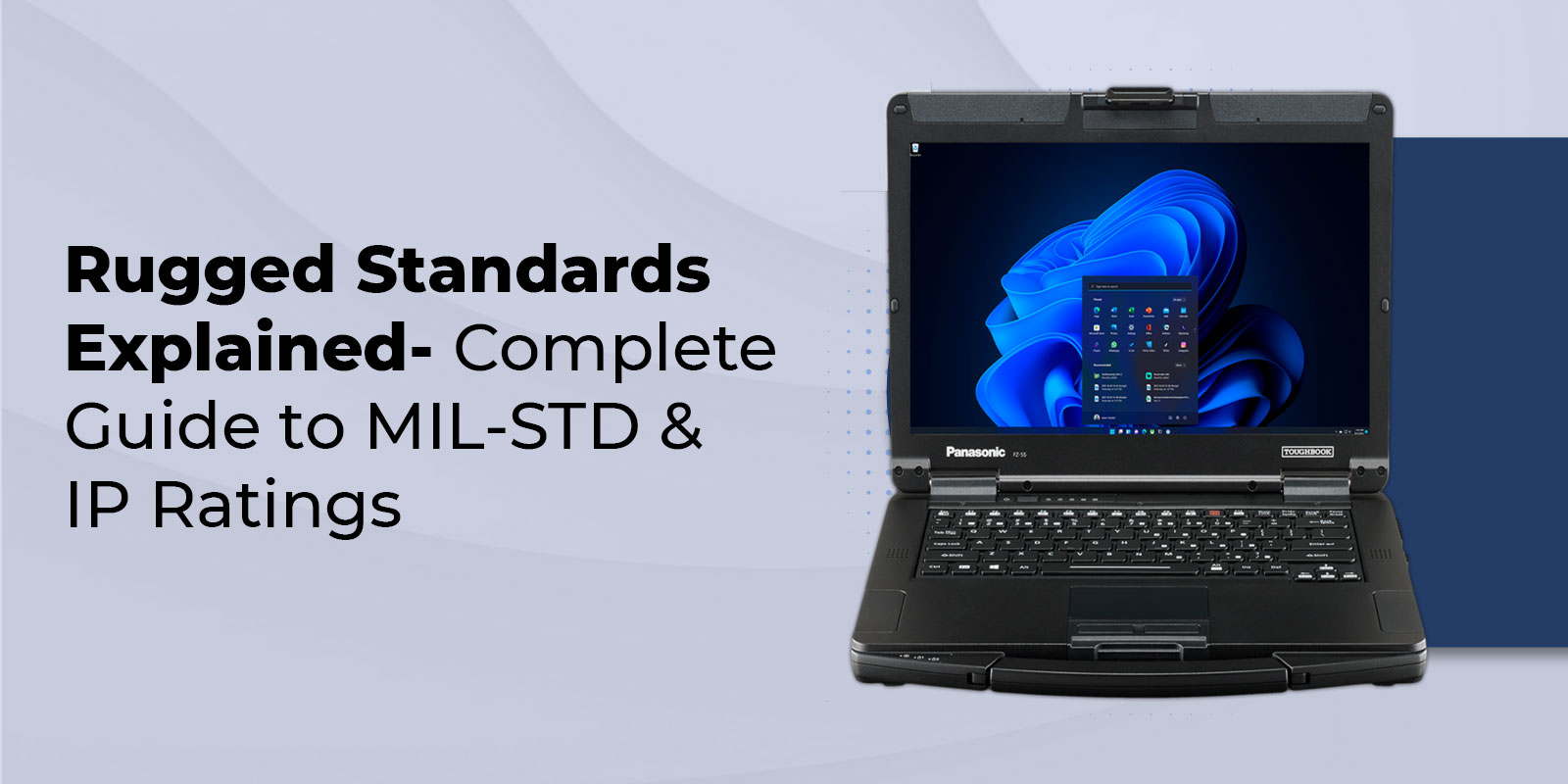
Rugged Standards Explained- Complete Guide to MIL-STD & IP Ratings
When buyers compare devices for demanding jobs, durability claims can sound similar even when the testing behind them is very different. This guide offers bold and practical. _ No, avoid italics. Let's instead start clean.
In this guide, rugged standards explained means turning technical labels into plain language so buyers, IT teams, and operations leaders can judge what matters in real working conditions. A device may look tough, but true ruggedization depends on how it is designed, what tests it passes, and how clearly the manufacturer documents those results. That is where durability standards become useful. They help separate marketing language from measurable performance in heat, cold, dust, water, drops, and vibration. This article covers the best-known frameworks, including MIL-STD-810H, rugged IP ratings, IEC 60529, NEMA 250, and ISO 16750. It also explains how rugged devices are built, why testing methods are changing, and where rugged systems deliver value across industry. By the end, readers should be able to interpret test claims, compare device classes, and decide whether a rugged smartphone, rugged laptop, or rugged tablet is worth the higher upfront price.
What Are Rugged Standards?
Rugged standards are formal testing frameworks and classification systems used to assess whether electronics can continue to operate in harsh physical conditions. In practice, they help manufacturers, buyers, and IT teams evaluate how a device handles drops, vibration, extreme temperatures, dust, water, and other real-world hazards. These standards do not all measure the same thing-some focus on environmental exposure, some on enclosure sealing, and some on industry-specific operating demands.
The purpose of rugged standards is not simply to label a device as “tough.” Their real value is consistency. A field worker in utilities, transportation, defense, or warehousing needs equipment that can survive environmental stress tests rather than just light office use. That is why rugged standards usually fall into three broad categories. Military-style environmental testing examines exposure to heat, cold, shock, and motion. Sealing classifications look at ingress protection against solids and liquids. Industrial enclosure standards examine how cabinets and housings perform in harsher electrical or outdoor settings.
Together, these frameworks shape purchasing decisions for field devices, industrial endpoints, and other edge computing hardware that must continue operating in remote environments.
MIL-STD-810 Series Explained
Origins and Evolution
The MIL-STD-810 family began in 1962 as a U.S. military framework for testing equipment under environmental stress. Over time, the standard evolved through multiple revisions as equipment design, deployment conditions, and testing methods changed. The latest widely referenced version, MIL-STD-810H, reflects decades of updates intended to make testing more relevant to actual mission environments rather than to generic pass-or-fail claims.
That history matters because MIL-STD is often misunderstood. It is not a simple stamp that means a product is unbreakable. It is a flexible military specification that gives a structure for selecting relevant test methods. A rugged computer used in a patrol vehicle, on a factory floor, or at a remote energy site may face very different stresses. The standard recognizes that by allowing manufacturers to tailor test profiles to intended use.
Common Test Methods
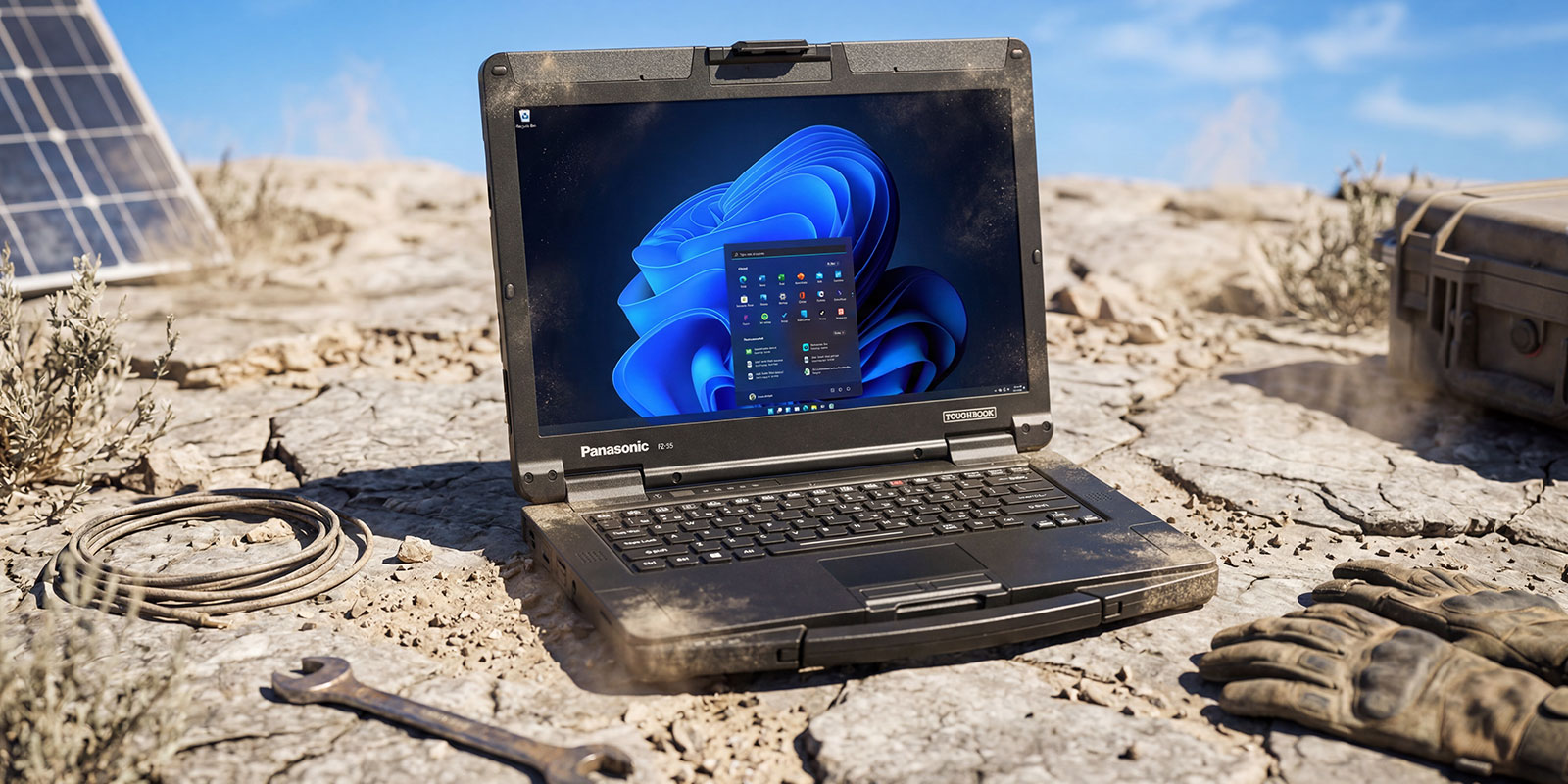
MIL-STD testing often includes repeated exposure to physical and environmental events that frequently damage conventional electronics. These may include shock resistance against accidental drops or impacts, vibration testing for vehicles and machinery, high- and low-temperature cycling, humidity testing, altitude exposure, and thermal shock where a device moves quickly between very different temperatures. Some methods also address blowing dust, rain, and related dust-protection concerns, although ingress sealing is handled more directly through IP codes.
Tailoring and Reporting
MIL-STD works best when manufacturers clearly document the test selection process and results. This is where responsible rugged reporting matters. A well-supported claim should explain which procedures were used, under what conditions, how long the test lasted, and whether the device stayed operational during and after testing. That level of detail is central to trustworthy rugged certification.
IP Ratings Demystified
First Digit
The first digit in an IP code shows protection against solid particles. This includes fingers, tools, and airborne debris such as dust. In practical buying terms, the difference between IP5X and IP6X is important. IP5X means dust ingress is not fully prevented, but the amount that enters should not interfere with operation. IP6X means complete dust protection under the defined test conditions.
For rugged electronics, this is critical in jobs involving construction residue, mining dust, flour processing, roadside grit, or warehouse particulates. Devices with higher solid-particle protection are better suited to repeated field exposure and support stronger enterprise durability over time.
Second Digit
The second digit measures water resistance. This is where confusion often starts, because users tend to treat all water ratings as equal. They are not. IPX4 suggests splash resistance from multiple directions. IPX7 indicates temporary immersion in water under controlled depth and time limits. IPX8 means immersion protection beyond IPX7, but the manufacturer must define the exact conditions.
This is why a higher waterproof rating should always be read with context. A device may survive accidental immersion yet still not be built for pressure washing, salt spray, or long-term outdoor exposure. Water testing should be matched to the job, especially for devices used in utilities, marine-adjacent fieldwork, food production, and emergency response.
Reading an IP Code
IP codes are standardized through IEC 60529, but manufacturer claims still need careful reading. A rating such as IP65 indicates the product has strong, solid-particle sealing and can resist water jets. An IP68 rating suggests stronger sealing, but the details of immersion testing can vary by device and test setup. That is why rugged IP ratings should be treated as part of the story, not the full story.
Other Key Standards
IEC 60529
IEC 60529 is the global reference behind IP classifications. It defines how products are tested for contact with solids and liquids and creates the language buyers see in IP codes. It does not cover every possible field condition, but it gives a reliable baseline for enclosure sealing.
NEMA 250
NEMA 250 focuses on enclosure ratings, often for industrial cabinets, panels, and electrical housings. It overlaps with IP concepts in some areas, but it is not a direct one-to-one substitute. NEMA also considers factors such as corrosion, gasket performance, and construction features that are important for industrial and outdoor installations.
ISO 16750
ISO 16750 is especially relevant in automotive and vehicle-connected electronics. It addresses environmental and electrical testing for road vehicle equipment, including vibration, temperature, and power-related stresses. For fleets and transport operations, it can be highly relevant alongside MIL-STD and IP data.
How Rugged Devices Are Built Differently
Rugged devices are not simply standard electronics wrapped in thicker plastic. Their design philosophy starts with survival under repeated stress. That usually means reinforced chassis materials, internal shock-mounted components, sealed ports, stronger corners, chemically strengthened glass, and gasket systems that resist water and dust intrusion. Thermal design is also adjusted so the device can handle high heat, cold starts, and subzero operation without the same failure patterns seen in consumer hardware.
Internal layout matters as much as exterior strength. Storage, connectors, antennas, and batteries must be secured to prevent vibration and impact from causing intermittent faults. This is one reason rugged systems often look bulkier. The trade-off is deliberate. Extra sealing, reinforced frames, and larger batteries add weight and thickness, but they support uptime in tough settings.
This difference is easy to see when comparing a rugged smartphone or rugged laptop with a normal consumer device. Rugged models prioritize reinforced corners, sealed openings, longer battery life, glove-friendly operation, and survival under heat, cold, spills, and repeated drops. Consumer devices usually prioritize slimmer design, higher-end display styling, and headline performance specs.
Testing Processes and Emerging Methodologies
Laboratory vs. Field Testing
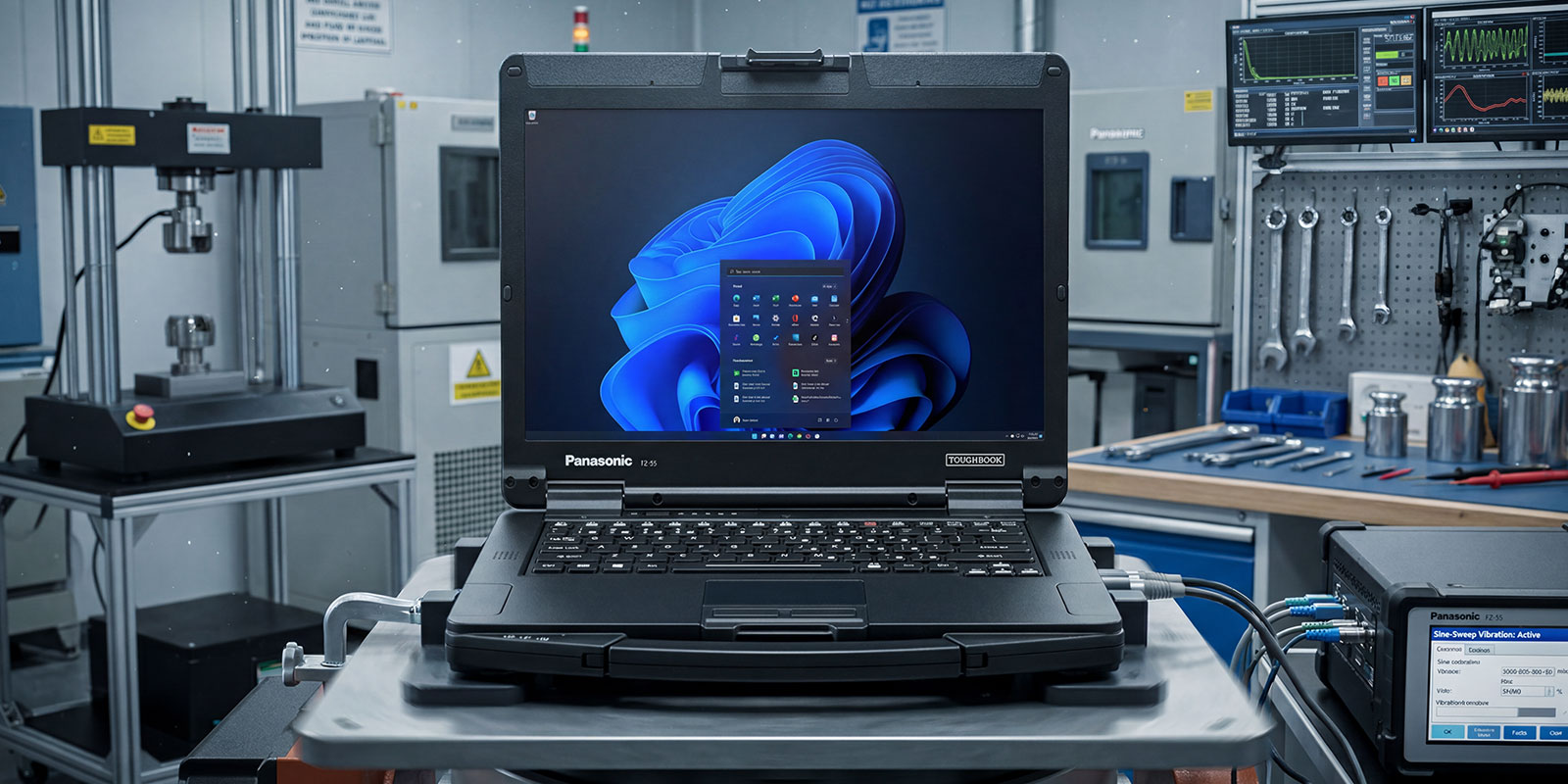
Laboratory tests are valuable because they give repeatable conditions and comparable results. They help manufacturers establish a baseline and document performance against known criteria. But real work rarely follows perfect lab protocols. Devices in energy, transportation, and field service may face mixed stress from drops, grime, vehicle vibration, rain, solar exposure, and constant handling in the same week.
That is why field validation remains important. The best testing approach combines controlled lab work with deployment-based feedback. Strong, rugged case studies often show that long-term field use reveals weak points that lab setups may not fully replicate, such as connector wear, user handling habits, and repeated transition from hot vehicles to cold outdoor air.
AI and Automation in Certification
Newer testing systems are using AI testing to identify failure patterns faster and more consistently. Instead of relying only on manual observation, machine learning models can track sensor data, thermal behavior, and repeated stress outcomes across large batches. This helps teams spot design weaknesses earlier in development.
The same shift supports automated certification workflows, where testing rigs gather, compare, and document more performance data with less manual variability. For manufacturers, this can shorten iteration cycles and improve reporting consistency.
Advanced Simulations and Robotics
Digital tools are also improving pre-test modeling. Digital simulation lets teams estimate how a device may react to shock, heat, sealing pressure, or repeated motion before physical prototypes are finalized. It does not replace real testing, but it reduces guesswork and helps narrow design choices.
Meanwhile, field robotics and automated mechanical rigs are expanding the ways in which repeated handling, drop orientation, and usage patterns can be reproduced. These methods are especially useful for organizations deploying hundreds or thousands of devices, where small design improvements can reduce failures at scale.
Benefits of Rugged Devices
The biggest benefit of rugged hardware is not just survival after a drop. It is a dependable operation over time. Rugged systems reduce the business cost of work interruption, emergency replacements, and field support. Industry figures suggest that non-rugged devices have a 15.5 percent failure rate over five years, compared with just 3.3 percent for rugged devices. That gap matters when equipment is tied to dispatching, inspections, compliance records, or live operational data.
Rugged devices can also support a stronger TCO analysis. Even with higher upfront pricing, long-term ownership can improve because fewer failures mean fewer replacements, less downtime, and less strain on IT teams. This is why many organizations decide that rugged hardware is worth the price, especially when workers cannot simply borrow another machine and continue.
Industry Use Cases
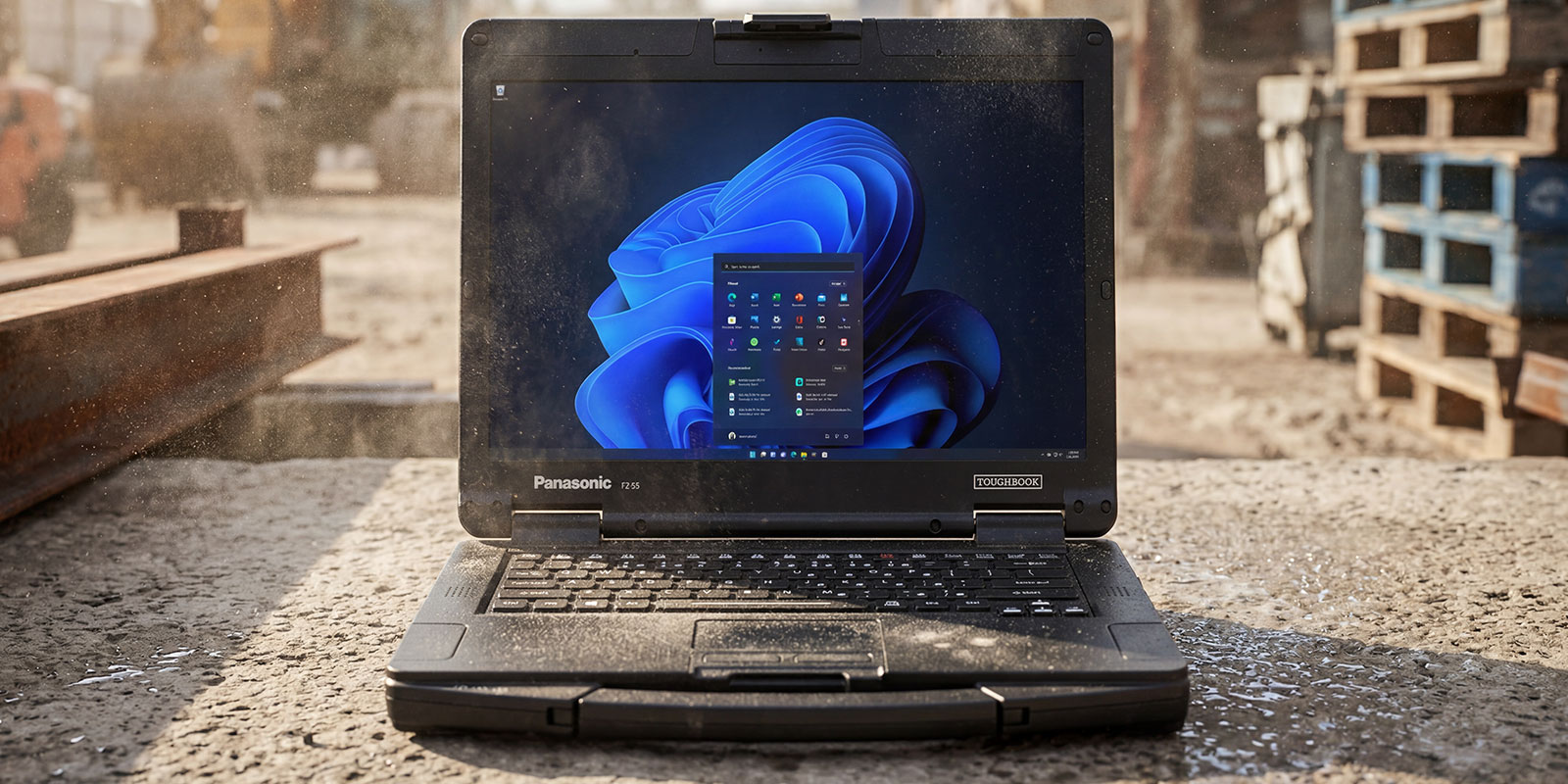
Energy teams working in substations, field maintenance, and utility inspection rely on rugged tablets and notebooks that can withstand weather swings, glare, and dirt while maintaining reliable data capture. Manufacturing teams use rugged systems around forklifts, production lines, and service carts where vibration and accidental impact are common. Logistics organizations depend on rugged handhelds and mobile computers to keep scanning, routing, and delivery workflows moving.
Defense and public safety use cases place even greater emphasis on mobility, heat, cold, and impact tolerance. In these settings, Panasonic TOUGHBOOK 40 and TOUGHBOOK G2 platforms are often better aligned with mission needs than conventional consumer devices. Rugged platforms also support OT security and network hardening, as reliable hardware is a core component of secure operations. When a device fails in the field, the problem is not just productivity loss. It can interrupt patching, monitoring, communications, and access control across critical systems.
Comparative Tables and Charts
Standards Comparison Table
|
Standard |
Primary Focus |
What It Helps Buyers Understand |
|
MIL-STD-810H |
Environmental exposure |
Drops, vibration, heat, cold, humidity testing, and operational resilience |
|
IEC 60529 |
Ingress protection |
Dust and water sealing through IP codes |
|
NEMA 250 |
Industrial enclosures |
Outdoor and industrial enclosure performance |
|
ISO 16750 |
Vehicle electronics |
Automotive environmental and electrical stress |
Five-Year Value Snapshot
|
Device Type |
Typical Five-Year Failure Pattern |
Cost Perspective |
|
Consumer-grade mobile computing |
Higher breakage and replacement frequency |
Lower purchase price but more downtime risk |
|
Rugged mobile computing |
Lower breakage frequency |
Higher upfront cost, but often better ownership value |
The business case is also supported by market growth. The global rugged electronics market was valued at USD 10.1 billion in 2023 and is projected to reach USD 15.9 billion by 2032, showing that more industries are investing in dependable hardware where uptime matters.
FAQs on Rugged Standards
1. What does “MIL-STD-810 certified” really mean?
It usually means the device was tested using selected MIL-STD methods, not that it is indestructible. Buyers should ask which procedures were used, under what conditions, and whether the reporting is available.
2. How do IP ratings compare across devices?
IP ratings compare the sealing of enclosures under standardized conditions. A higher code can indicate stronger dust or water resistance, but test details still matter. Two devices may both claim IP68 while differing in immersion depth and duration.
3. Are rugged devices more expensive?
Yes, the upfront cost is usually higher. That said, rugged devices are often worth it when downtime, replacement cycles, and field interruption are expensive. This is particularly true for a rugged laptop or rugged tablet used every day in demanding environments.
4. How to verify test reports and certifications?
Ask for actual test documentation, method references, lab conditions, and model-specific results. Strong manufacturers should be able to explain how the device was tested and which claims apply to which configuration.
Future Trends and Sustainability
The future of rugged electronics will not be shaped solely by toughness. It will also be shaped by smarter testing, better reporting, and longer usable life. One major shift is sustainability in testing, where manufacturers look for ways to reduce waste during validation and design products for easier battery service, longer refresh cycles, and more responsible materials use.
This connects closely with the circular economy. A rugged device that lasts longer, stays in service across multiple deployment cycles, and avoids repeated replacement can reduce waste even if it costs more at the start. Testing methods are also moving toward smarter automation and data-driven design, helping manufacturers find faults earlier and reduce unnecessary prototype waste.
Wrapping Up
Rugged standards matter because they turn vague durability claims into something measurable. They help buyers understand whether a device can survive drops, dust, water, heat, cold, motion, and constant field use without turning every repair into an operational problem. They also make it easier to distinguish between a typical mobile device and hardware designed for demanding work.
For teams evaluating Panasonic TOUGHBOOK models and other rugged-ready business systems, the key is to match the test profile to the actual environment. If your organization needs dependable computing for harsh sites, mobile crews, warehouses, utilities, or critical operations, Rugged Computing Inc. can help you compare the right Panasonic TOUGHBOOK products for your workflow and budget. Reach out to Rugged Computing Inc. to find the right device for real-world performance, longer service life, and fewer costly interruptions.