Rugged Laptops for Oil and Gas, the Complete Buyer's Guide (2026)
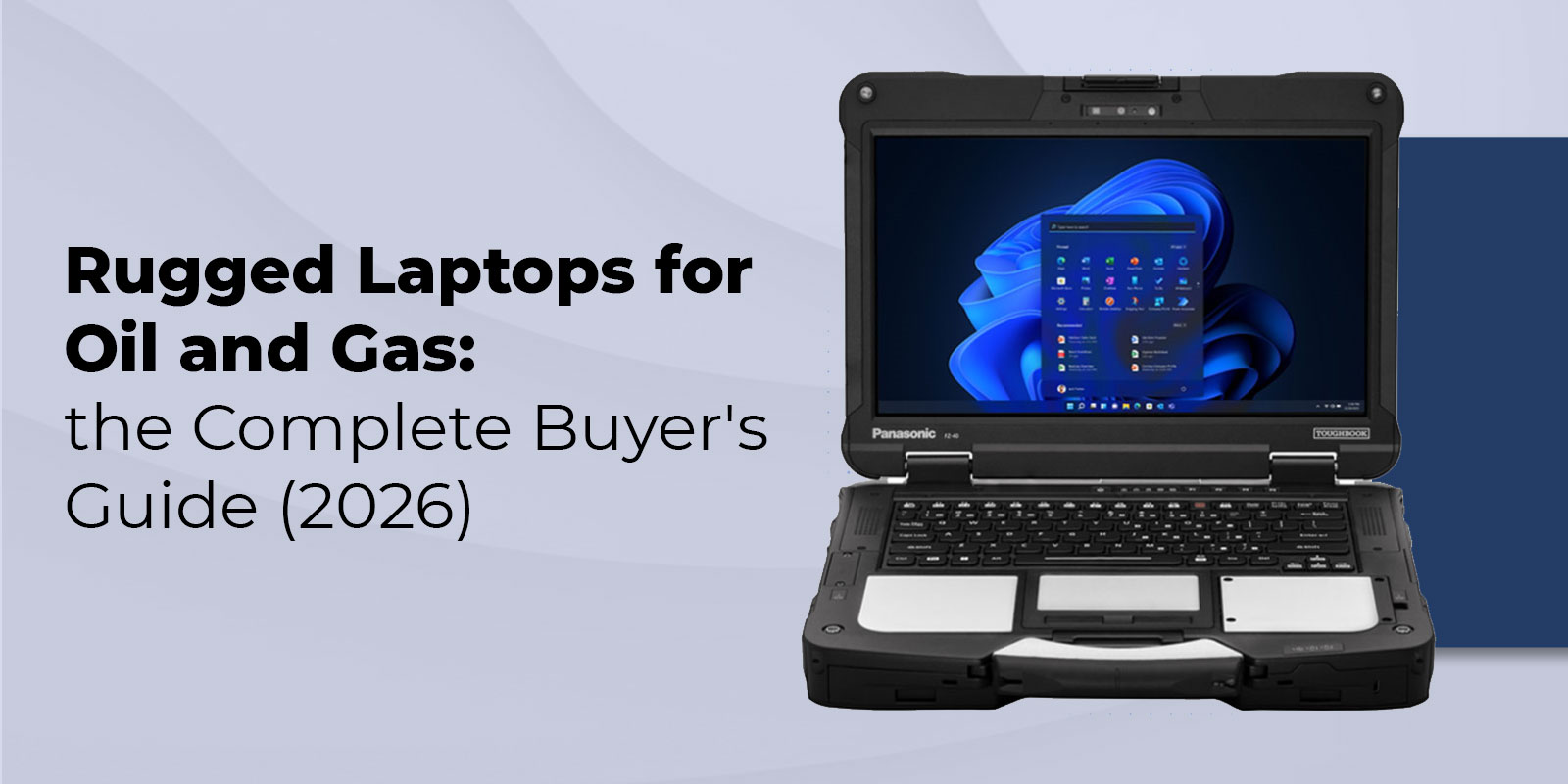
A rugged laptop for oil and gas is a purpose-built mobile computer rated for drilling sites, refineries, pipelines, and offshore platforms. Unlike standard laptops, rugged models meet MIL-STD-810H impact and environmental standards, carry IP65 or higher ingress protection, and, in hazardous upstream zones, hold Class 1 Division 2 (C1D2) certification for safe use around flammable gases. The right model depends on where in the oil and gas value chain you operate.
Why Standard Laptops Fail in Oil and Gas Environments
Oil and gas worksites are among the harshest operating environments in any industry. A standard commercial laptop typically fails within months of field deployment. Unprotected ports fill with drilling fluid particulates. Display backlights fail under direct desert or offshore sunlight. Mechanical hard drives seize under continuous vibration from drilling equipment. Circuit boards corrode from salt fog on offshore platforms.
Operating temperatures are a decisive factor. Commercial laptops are typically rated for 32 degrees F to 104 degrees F (0 to 40 degrees C). Oil and gas field operations regularly encounter temperatures from -20 degrees F (-29 degrees C) in Arctic upstream operations to 140 degrees F (60 degrees C) at downstream refinery sites. A device that fails at these thresholds does not just slow productivity. In mission-critical monitoring environments, it creates a safety risk.
The financial case for rugged hardware is equally clear. Research by IDC commissioned by Panasonic found that rugged notebooks are replaced every 4.8 years on average, compared to 3.9 years for standard laptops. In field deployment environments, downtime costs, data recovery, and remote redeployment logistics mean the total cost of ownership difference significantly outweighs the upfront premium.
Upstream, Midstream, and Downstream Need Different Laptops
Treating every oil and gas job the same way leads to one of two expensive mistakes: paying for hazardous area certification you do not need, or sending an uncertified laptop into a zone where it creates real compliance and safety risk. Here is how the requirements actually map across the three segments of the value chain.
Upstream: Exploration and Drilling
Upstream covers drilling rigs, wellheads, seismic survey sites, and remote exploration locations, and it is the most demanding environment in the category. Class 1 Division 2 or ATEX Zone 2 certification is not optional anywhere flammable gases may be present. Beyond that, you need MIL-STD-810H for drops, vibration, and temperature extremes, with IP65 as the practical floor for ingress protection. Remote sites without cellular coverage need built-in or modular satellite connectivity, and battery life of 10 hours or more (or hot-swap capability) keeps a crew running through a shift without a generator nearby. A display rated 800 nits or higher is the minimum for outdoor readability at a well site.
Midstream: Pipeline and Transport
Midstream work, pipeline inspection, transportation monitoring, and storage facility operations is more forgiving than upstream, though classified zones still exist inside compressor stations and storage terminals. A fully rugged or semi-rugged device works depending on how close your crew operates to the pipeline itself. GPS and GIS integration matter here for route mapping and inspection logging, and LTE or 5G connectivity is usually sufficient since midstream sites tend to sit closer to existing infrastructure than remote upstream locations.
Downstream: Refining and Processing
Refineries, petrochemical plants, and processing terminals fall under downstream. Many of these facilities carry designated hazardous areas that still require ATEX Zone 2 or C1D2 compliance, but outside those zones, a semi-rugged device usually covers administrative and SCADA monitoring work without issue. Integration with SCADA and process management software is standard here, and data security for proprietary process information is becoming a bigger procurement priority. Vendor support longevity matters too. Look for a minimum five-year commitment to spare parts and firmware before you sign off on a fleet purchase.
What Oil and Gas Certifications Actually Mean
Vendor spec sheets throw around a lot of acronyms. Knowing what each one actually tests keeps you from either overpaying for protection you do not need or deploying a laptop that fails a compliance audit.
MIL-STD-810H
MIL-STD-810H is the U.S. Department of Defense standard defining environmental test methods for vibration, mechanical shock, temperature shock, humidity, altitude, dust, water immersion, and salt fog. It is the baseline durability benchmark for any rugged laptop you would consider for oil and gas use. The older MIL-STD-810G revision is still valid for legacy hardware, but new purchases should specify the current 810H standard.
IP Ratings (IEC 60529)
IP65 means fully dust-tight and protected against water jets from any direction. IP66 adds protection against powerful, high-pressure water jets, which matters for well-site wash-down routines. IP67 and IP68 add temporary and continuous submersion protection, but most oil and gas roles do not need that level unless you are working subsea. Match the rating to your actual exposure, not the highest number on the spec sheet. Our IP65 explainer breaks down exactly what each digit protects against.
Class 1 Division 2 (C1D2, ANSI/UL 121201)
C1D2 is the North American classification for equipment used in locations where flammable gases, vapors, or liquids may be present under abnormal conditions. On drilling platforms, wellhead facilities, and classified refinery zones, this certification is not a nice-to-have. It confirms the device cannot generate enough heat or spark to ignite the surrounding atmosphere. Certification is granted at the specific product configuration level, not the brand level, so always confirm the exact model and SKU you are buying carries current ANSI/UL 121201 documentation before it goes anywhere near a hazardous zone.
ATEX Zone 2 (EU Equivalent)
ATEX is the European equivalent of C1D2, governed by EU directive 2014/34/EU, and it covers locations where an explosive atmosphere is not expected under normal conditions but may occasionally occur. If your operation touches EU jurisdictions or exports to European markets, ATEX Zone 2 is the standard you need. Select Toughbook configurations are available with C1D2 certification for North American deployment, and we can help confirm ATEX-equivalent options for international sites.
Rugged Laptop Comparison for Oil and Gas (2026)
The table below maps the laptops most commonly deployed in oil and gas to their certifications and the operating environment they fit best. All Panasonic Toughbook models are available new or certified refurbished through Tough Rugged Laptops, and the Toughbook 40 can be configured with an ANSI C1D2 Haz Loc option directly at checkout.
|
Model |
Rugged Class |
Key Certifications |
IP Rating |
Battery |
Best Fit |
|
Panasonic Toughbook 40 |
Fully Rugged |
MIL-STD-810H, optional C1D2, TAA |
IP66 |
Hot-swap, up to 36 hrs |
Upstream drilling, offshore, hazardous zones |
|
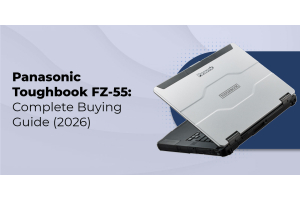
Panasonic Toughbook FZ-55 |
Semi-Rugged |
MIL-STD-810H |
IP53 |
Up to 20 hrs, hot-swap |
Midstream and downstream office and SCADA roles |
|
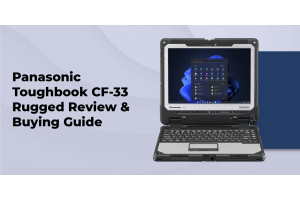
Panasonic Toughbook CF-33 |
Fully Rugged 2-in-1 |
MIL-STD-810G, optional C1D2 |
IP65 |
Hot-swap, up to 16 hrs |
Vehicle-mounted pipeline and inspection work |
|
Dell Pro Rugged 14 |
Semi-Rugged |
MIL-STD-810H, TAA |
IP53 |
Up to 18 hrs |
Downstream administrative and government-adjacent procurement |
|
Getac B360 |
Fully Rugged |
MIL-STD-810H, optional C1D2 |
IP66 |
Hot-swap, up to 18 hrs |
Pipeline inspection, midstream field service |
Note: certification applies to the specific model configuration purchased, not the product line in general. Always confirm C1D2 or ATEX documentation for the exact SKU before deployment in a hazardous zone.
5 Features That Determine the Right Rugged Laptop for Your Operation
Picking the wrong device is one of the most expensive mistakes in oil and gas IT procurement. These five specs narrow the field before you start comparing individual models.
1. Fully Rugged vs Semi-Rugged
Fully rugged devices use sealed keyboards, magnesium alloy chassis, and reinforced port covers rated for 4 to 6-foot drops. Semi-rugged devices are lighter and less expensive, but they are not sealed to the same standard. Upstream and offshore work calls for fully rugged hardware. Downstream administrative and SCADA monitoring roles, without direct hazardous atmosphere exposure, are usually well served by semi-rugged units like the Toughbook FZ-55, which offers a better price-to-performance ratio for that kind of work. See our full semi-rugged versus fully rugged comparison for the complete breakdown.
2. IP Rating Matched to Your Environment
Do not buy a generic rugged label. Decide whether your primary exposure is IP53 (splash resistant, for partially sheltered midstream work), IP65 (jet-water resistant, for outdoor upstream use), or IP66 (high-pressure wash-down, for well-site environments) and buy accordingly. Over-specifying adds cost and weight you will never use in the field.
3. Hazardous Area Certification
If the laptop will operate in any upstream hazardous zone or classified refinery area, C1D2 (North America) or ATEX Zone 2 (EU) certification is non-negotiable. Confirm the certification at the specific model and configuration level. A manufacturer having other certified models in its lineup does not make the unit you are buying compliant.
4. Battery Life and Hot-Swap Capability
For remote upstream sites or pipeline routes without reliable power, battery life determines whether your crew keeps working or stops early. Look for a minimum of 10 hours of real-world runtime. Hot-swap capability, available on the Toughbook 40 and Toughbook FZ-55, lets you swap a depleted battery without powering down, which matters during continuous monitoring or data-logging sequences where shutting the device off is not an option.
5. Connectivity for Your Operating Location
Onshore operations near existing infrastructure can rely on built-in LTE or 5G. Remote upstream sites and offshore platforms may need satellite connectivity, available as an integrated or modular accessory on select fully rugged models. GPS integration is a practical requirement for pipeline inspection and field service roles where location tracking and route mapping are daily tasks. Confirm the connectivity module you need is available for your selected configuration before you place the order, since these are typically built-to-order rather than stocked.
The Real Total Cost of Ownership Case for Rugged Hardware
The upfront price of a rugged laptop is two to four times that of a comparable commercial device. In oil and gas procurement, this comparison is misleading. The relevant metric is the total cost of ownership over the full asset lifecycle.
IDC research commissioned by Panasonic found that rugged notebooks are replaced every 4.8 years on average, versus 3.9 years for standard laptops. In field deployment environments, the cost is not simply the device replacement. It includes field technician downtime, data recovery, logistics of device return and replacement in remote locations, and the compliance and safety implications of running non-certified hardware in hazardous zones. Panasonic data shows Toughbook failure rates are approximately five times lower than average commercial laptops.
|
Metric |
Consumer Laptop |
New Rugged Toughbook |
Certified Refurbished |
|
Average replacement cycle |
3.9 years (industry average) |
4.8 years (industry average) |
4.8 years (industry average) |
|
Upfront unit cost |
$800 to $1,500 |
$3,000 to $5,500 |
$700 to $2,000 |
|
Hazardous zone certified |
No |
Yes, on C1D2 configurations |
Depends on the unit, verify before purchase |
|
Technical support |
Manufacturer only |
TRL lifetime support |
TRL lifetime support |
For fleets of 50 or more devices operating upstream or along a pipeline corridor, the lifecycle savings typically exceed the initial premium within the first renewal cycle. New devices give you full Panasonic manufacturer warranty coverage and TAA compliance for government-adjacent procurement. Certified refurbished models deliver 60 to 75 percent savings with comparable performance for non-hazardous downstream deployments and pilot programs where hazardous area certification is not a requirement.
Have a fleet to configure? Our specialists can match certifications, battery configuration, and connectivity to your exact site requirements, with GSA pricing available for qualifying fleet sizes. Call or visit ToughRuggedLaptops.com to request a quote.
FAQs
1. What certifications does a rugged laptop need for oil and gas work?
Look for Class 1 Division 2 (C1D2) or ATEX Zone 2 certification for hazardous locations, along with MIL-STD-810H durability and an IP65 or higher rating.
2. What is the difference between C1D2 and ATEX certification?
C1D2 is the North American hazardous location standard, while ATEX applies to the European Union. Organizations operating internationally may require devices certified to both.
3. Which Panasonic Toughbook is best for oil and gas field work?
The Toughbook 40 is ideal for upstream and offshore environments, while the Toughbook FZ-55 is a strong choice for midstream and downstream operations.
4. Can a semi-rugged laptop be used in oil and gas environments?
Yes, for office, downstream, and some pipeline applications. Hazardous locations typically require a fully rugged, certified device.
5. How long do rugged laptops last in oil and gas operations?
Most rugged laptops last 5–7 years with proper maintenance and vendor support.
6. Do rugged laptops support remote-site connectivity?
Yes. Many models offer 4G LTE, 5G, GPS, and optional satellite connectivity for remote field operations.
Find the Right Configuration for Your Site
The right rugged laptop for oil and gas work is the one matched to where in the value chain you actually operate, not the model with the most certifications on the spec sheet. An upstream drilling crew and a downstream SCADA technician need very different hardware, and buying past your actual requirements wastes budget that could go toward fleet size or support coverage instead.
Tough Rugged Laptops carries the full Panasonic Toughbook lineup, new and certified refurbished, including the Toughbook 40 in an ANSI C1D2 Haz Loc configuration for upstream and hazardous-zone deployment. Every order ships free within the US and includes lifetime technical support for the life of the device.