The Real Guide to Waterproof Laptops- IP Ratings, Verified Models, and Use Cases
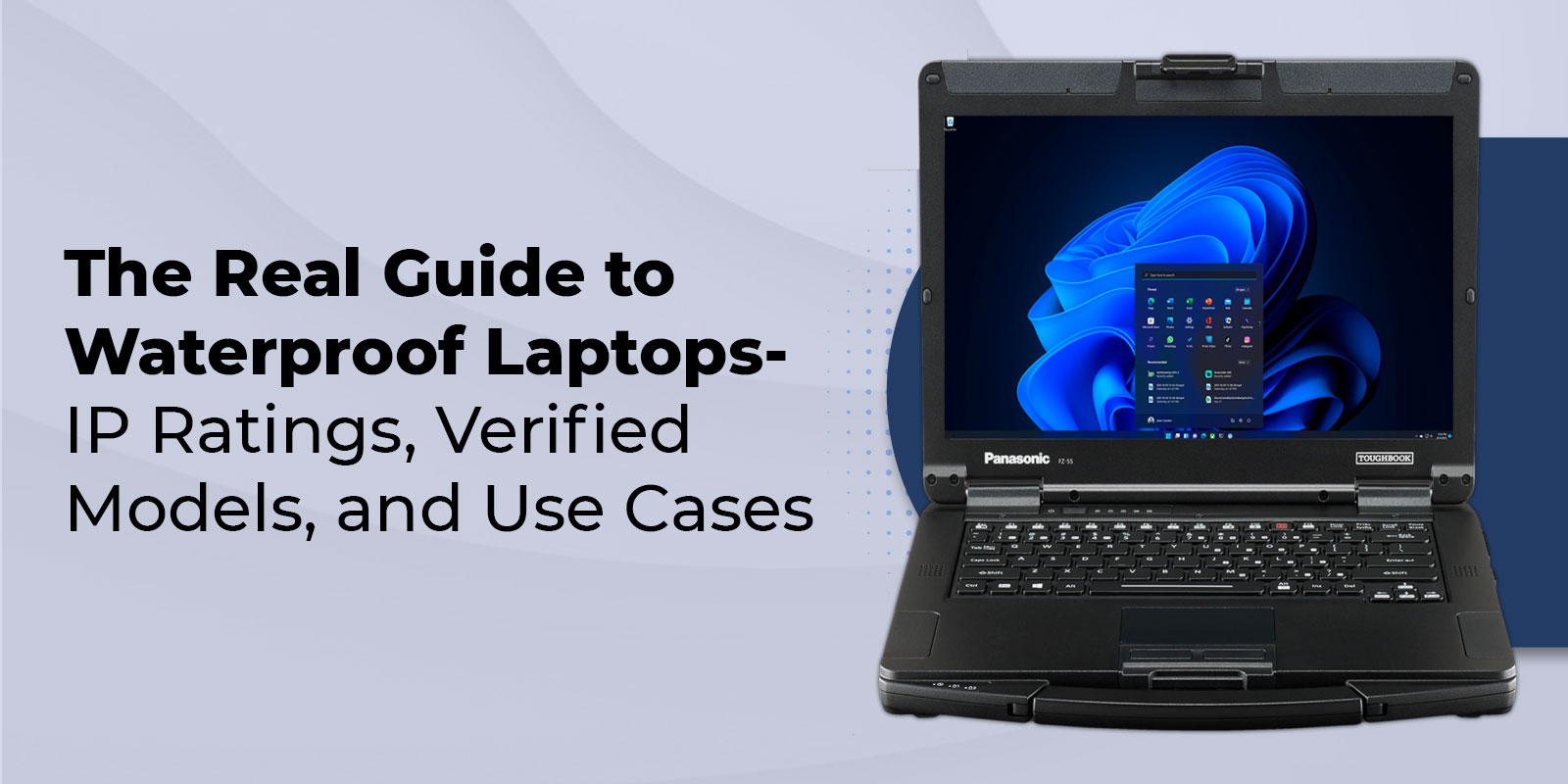
A waterproof laptop is a ruggedized portable computer with a verified IP (Ingress Protection) rating of IP65 or higher, as defined by the IEC 60529 standard, and sealed against dust and water. True waterproof laptops are built for field, industrial, military, and emergency services environments. Consumer laptops are not waterproof. The leading verified models come from Panasonic Toughbook and Getac.
Most laptops marketed as waterproof are only water-resistant. The difference matters when your work is done in the rain, on a marine deck, on a dust-laden construction site, or near pressurized cleaning equipment. This guide decodes IP ratings, names the laptops that actually meet them, and shows you how to match a rating to your real work environment.
What Is a Waterproof Laptop? Waterproof vs Water-Resistant Defined
A waterproof laptop is a sealed-chassis portable computer certified to withstand specific water and dust exposure under a published standard. The dominant standard is IEC 60529, which assigns an IP code such as IP65 or IP67. A water-resistant laptop, by contrast, can handle incidental moisture (a coffee spill, light splashes) but has no certified protection against directed water, immersion, or dust ingress.
The distinction is not marketing wordplay. It changes warranty coverage, total cost of ownership, and field uptime. A water-resistant business laptop may survive an accidental spill at a desk. A waterproof laptop will run through a rainstorm on a utility pole, on a marine bridge, in a wildland-fire incident command vehicle, or under a hose-down on a food-processing line.
Related terms surface in product listings and search queries- splash-proof, weatherproof, moisture-proof, hydrophobic. None of these is standardized. Only an IP code, ideally paired with MIL-STD-810H certification, gives you a verified, testable claim.
|
Quick takeaway Waterproof = sealed and certified under IEC 60529 to a specific IP rating. Water-resistant = vague marketing language. If you cannot find the IP rating on the manufacturer's spec sheet, treat the laptop as water-resistant at best. |
IP Ratings Explained- IP53, IP65, and IP67 Decoded
An IP rating contains two digits. The first digit (0-6) indicates protection against solids and dust. The second digit (0 to 9) indicates the level of protection against water. Higher numbers mean stronger sealing.
IP53- Dust-protected, splash-resistant
A semi-rugged tier. IP53 laptops keep most dust out and tolerate water spray from a 60-degree angle off vertical. This level is appropriate for light field use (sales reps, surveyors moving between the truck and the office), but not for sustained outdoor exposure. Many business-rugged Dell, Lenovo, and Panasonic semi-rugged models are IP53-rated.
IP65- Dust-tight, water jet-resistant
The fully-rugged baseline. IP65 means complete dust exclusion and resistance to low-pressure water jets from any direction. IP65 laptops handle heavy rain, dust storms, and routine hose-down cleaning. Most working field deployments- police mobile-data terminals, EMS rigs, oil and gas survey work, construction sites- specify IP65 as the minimum. Panasonic Toughbook 40, Toughbook 33, Toughbook G2, and Getac B360 G2 all meet IP65.
IP67- Dust-tight, temporary submersion
The premium tier. The 7 in IP67 means the unit survives immersion in one meter of freshwater for 30 minutes without harmful water ingress. IP67 is rare in true clamshell laptops. Most products marketed as IP67 are rugged tablets or fanless industrial panel PCs. Specific use cases- marine instrumentation, mining survey, military field medical- justify IP67. Confirm the rating with a third-party test report number, not a marketing label.
IP Rating Decoder Table
|
IP Code |
Dust Protection |
Water Protection |
Real-World Use Case |
|
IP53 |
Dust-protected |
Water spray (60 degrees off vertical) |
Light field, semi-rugged office hybrid |
|
IP54 |
Dust-protected |
Water splashes from any direction |
Light outdoor, indoor industrial |
|
IP65 |
Dust-tight |
Low-pressure water jets from any direction |
Fully-rugged field deployment, rain, hose-down |
|
IP66 |
Dust-tight |
High-pressure water jets |
Marine deck, washdown environments |
|
IP67 |
Dust-tight |
Temporary immersion (1m / 30 min) |
Submersion-risk operations |
|
IP68 |
Dust-tight |
Continuous immersion (manufacturer-defined) |
Specialized industrial only |
MIL-STD-810H and Why It Matters for Water Resistance
MIL-STD-810H is the US military environmental test standard. It runs equipment through documented procedures for shock, vibration, temperature shock, humidity, sand and dust, salt fog, rain, and immersion. A laptop tested to MIL-STD-810H has been physically subjected to those conditions in an accredited lab.
MIL-STD-810H is not a substitute for an IP rating. A laptop can pass MIL-STD-810H rain testing without holding IP65 certification, because the standards measure protection differently. The two ratings complement each other: IP65 verifies sealed-chassis ingress protection, and MIL-STD-810H verifies operational survival across a broader environmental envelope. Fully rugged Toughbook and Getac models carry both certifications.
When evaluating a waterproof laptop, look for the explicit method numbers cited in the spec sheet (for example, Method 506.6 for rain or Method 512.6 for immersion). Manufacturer marketing language that says "meets MIL-STD-810H" without naming methods is a yellow flag- ask for the test report.
Decision Framework- Which IP Rating Do You Actually Need?
Over-specifying ruggedization wastes money. Under-specifying causes downtime. This five-step framework matches your real environment to the correct IP rating before you buy.
Step 1- Catalog your environment honestly
Write down the worst conditions your laptop will face during a normal work week, not the worst-case-ever scenario. A patrol officer's laptop sees daily heat, vibration, and routine rain entries. A marine mechanic's laptop is exposed to salt spray and washdown. A wildland firefighter's laptop sees smoke, ash, and intense heat. Different environments demand different ratings.
Step 2- Map exposure to rating
|
Environmental exposure |
Minimum IP rating |
Recommended |
|
Office, vehicle interior, occasional spills |
Spill-resistant (no IP needed) |
Business-rugged |
|
Light rain, dust, transport between sites |
IP53 |
Semi-rugged |
|
Sustained outdoor field work, heavy rain, and dust storms |
IP65 |
Fully-rugged |
|
Hose-down cleaning, marine spray, washdown |
IP65 to IP66 |
Fully-rugged |
|
Brief submersion risk, dock work, flood response |
IP67 |
Fully-rugged + submersion-rated |
Step 3- Verify MIL-STD-810H methods
Ask for the specific test methods the manufacturer claims to use. Method 506.6 (rain), 510.6 (sand and dust), and 512.6 (immersion) are the methods most relevant to water-resistance claims. A reputable manufacturer or specialist reseller will provide the test report or summary.
Step 4- Confirm sealed-port design
True IP65+ laptops use gasketed port covers and sealed connectors (often M12 threaded connectors on industrial models, or rubber-gasketed flap covers on Toughbook and Getac clamshells). Rubber flaps wear out within two to three years of heavy use. Plan for gasket inspection in your maintenance schedule.
Step 5- Budget for the right tier, not over
A fully rugged IP65 Toughbook 40 will cost more than a business-rugged laptop, but it will last five-plus years in a field environment where a non-rugged laptop fails within 12 months. Total cost of ownership, not sticker price, is the basis for the procurement decision.
The Best Waterproof Laptops for Outdoor Use (Verified Models)
Every model listed below carries a verified IP rating and MIL-STD-810H certification, as published on the manufacturer's spec sheet. Pricing varies by configuration- refurbished options are available for most models, often at 40 to 70 percent below the new price.
Panasonic Toughbook 40
14-inch fully-rugged clamshell. IP66 sealing, MIL-STD-810H certified. The current flagship for field service, public safety, and military deployment. Hot-swappable batteries, modular expansion bays, a sunlight-readable display, and a sealed keyboard. The Toughbook 40 is the most versatile waterproof laptop on the market today.
Panasonic Toughbook G2
10.1-inch fully-rugged 2-in-1 tablet/laptop. IP65, MIL-STD-810H. The detachable keyboard design makes it equally useful for vehicle-mounted operations and walk-up data capture. Common in EMS rigs, traffic enforcement, and inspection workflows.
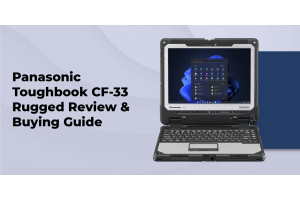
Panasonic Toughbook CF-33 / FZ-33
12-inch fully-rugged 2-in-1. IP65, MIL-STD-810H. A long-running field favorite. Hot-swappable dual batteries enable shift-long operation without docking. Widely deployed in law enforcement and utilities.
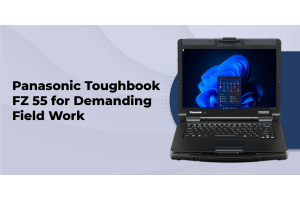
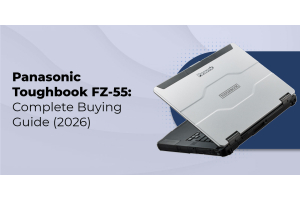
Panasonic Toughbook 55 / FZ-55
14-inch business-rugged clamshell. IP53, MIL-STD-810H selected methods. A semi-rugged option for users who need durability and modular bays but do not require full IP65 protection. Excellent value, especially in refurbished configurations.
Panasonic Toughbook 33 / CF-33
Predecessor to the CF-33 line, still widely deployed. IP65, MIL-STD-810G. Strong refurbished value for organizations standardized on an older Toughbook ecosystem.
Getac B360 G2
13.3-inch fully-rugged clamshell. IP66, MIL-STD-810H. A direct, fully rugged competitor to the Toughbook 40, with a high-brightness, sunlight-readable display and configurable I/O. Popular in defense and utilities.
Getac F110
11.6-inch fully-rugged tablet. IP66, MIL-STD-810H. Lightweight tablet form factor for field inspection, asset management, and vehicle telematics applications where a clamshell is impractical.
Getac S410
14-inch semi-rugged clamshell. IP53, MIL-STD-810H selected methods. A mid-tier choice for organizations that need rugged durability but don't require IP65 protection.
Getac K120
12.5-inch fully-rugged 2-in-1. IP66, MIL-STD-810H. Convertible design with hot-swappable battery, ideal for hybrid deployment between vehicle docking and handheld field use.
Industries That Depend on Waterproof Laptops
Waterproof laptops are purchased in bulk by organizations where downtime is expensive and field conditions are unpredictable.
- Law enforcement and public safety- patrol vehicle mobile-data terminals, K-9 unit laptops, marine patrol, search-and-rescue command.
- EMS and fire services- ambulance ePCR systems, fireground command vehicles, hazmat response.
- Marine and offshore- bridge navigation, deck operations, oil rig control rooms, fisheries enforcement.
- Oil, gas, and utility- pipeline inspection, well-site monitoring, electrical grid maintenance, and water utility field service.
- Construction and field engineering- BIM and CAD on jobsite, surveying, inspection, and equipment diagnostics.
- Automotive locksmiths and mobile technicians- in-vehicle diagnostic and key-cutting operations exposed to weather.
- Military and defense- forward-deployed command, communications, and intelligence systems.
- Agriculture and forestry- precision-ag rigs, timber harvest equipment, livestock-management field operations.
If your team works in any of these environments, a properly specified waterproof laptop pays for itself by preventing a single weather-related failure.
Refurbished vs New Waterproof Laptops- The Cost Reality
A new fully-rugged Toughbook 40 typically lists between $4,500 and $5,500 depending on configuration. A new Getac B360 G2 runs $3,500 to $5,000. These are real prices, not marketing inflation, because rugged laptops are built in low volume with certified components.
Certified refurbished waterproof laptops from authorized resellers cost 40 to 70 percent less. A refurbished Toughbook 33 in good working condition often sells for under $1,500. A refurbished Toughbook 55 can be found below $800. These are the same chassis, the same sealing, the same MIL-STD-810H certification- restored, retested, and warrantied.
For most field deployments, a refurbished Toughbook or Getac delivers better value than buying a new consumer laptop and replacing it every twelve to eighteen months. Insist on a stated warranty (one to three years is standard from a quality refurbisher) and a clear grading system that distinguishes between cosmetic and functional condition.
Common Myths About Waterproof Laptops
Myth- Toughbooks are bulletproof.
Toughbooks are tested to MIL-STD-810H for shock, drop, vibration, water, and dust- not ballistic resistance. The brand carries a reputation for surviving extreme field abuse, but bullet-resistance is not a published or tested claim. Do not rely on a laptop as a protective barrier.
Myth- A rugged laptop is automatically waterproof.
Business-rugged and semi-rugged laptops often carry IP53 or no IP rating at all. Only fully-rugged units with IP65 or higher are waterproof in any meaningful sense. Always check the spec sheet.
Myth- There are waterproof gaming laptops.
Gaming laptops use high-power GPUs and CPUs that require active fan cooling and large vents. Active vents are incompatible with IP65+ sealing. No major gaming laptop holds an IP rating above IP54. A waterproof gaming laptop does not currently exist.
Myth- "IP67-compatible" means IP67 protection.
"IP67-compatible" is a marketing label with no test report behind it. Only accept "IP67-certified," backed by a third-party test number from an accredited lab (UL, TÜV, Intertek, or equivalent).
How to Maintain Your Waterproof Laptop
- Inspect port-cover gaskets every six months in heavy-use environments. Replace gaskets showing cracks, compression set, or visible debris contamination.
- Close all port covers fully before water exposure. An open port cover defeats the IP rating instantly.
- Avoid pressurized cleaners above the unit's tested rating. IP65 covers low-pressure jets- do not assume IP66 or IP67 unless certified.
- Do not expose the laptop to solvents, fuels, or harsh chemicals unless the manufacturer publishes compatibility. Many gasket materials degrade in contact with petroleum, acetone, or chlorine.
- Allow the unit to dry before docking or charging if it has been submerged or hosed down. Trapped water in ports can short connector pins.
- Keep the keyboard membrane and touchpad clean. Sealed keyboards still accumulate grit that wears membranes over time.
Frequently Asked Questions
1. Do waterproof laptops exist?
Yes. True waterproof laptops exist and are produced by Panasonic (Toughbook line) and Getac, among other rugged-computing manufacturers. They carry verified IP65 or higher ratings under IEC 60529 and are MIL-STD-810H certified. Consumer laptops from major brands are not waterproof- they may be spill-resistant at best, with no certified ingress protection rating.
2. Which laptops are spill proof?
Semi-rugged business laptops with sealed or spill-resistant keyboards offer spill protection without full waterproofing. The Panasonic Toughbook 55 (FZ-55) is a strong spill-proof option with a sealed keyboard and IP53 chassis. Getac S410 also offers spill-proof construction. Fully-rugged Toughbook and Getac models (IP65+) exceed spill protection by handling rain, dust, and washdowns.
3. What is the best laptop for outdoor use?
The Panasonic Toughbook 40 is widely regarded as the best laptop for sustained outdoor use. It carries IP66 sealing and MIL-STD-810H certification, has a 1,200-nit sunlight-readable display, hot-swappable dual batteries, and a sealed keyboard. For tablet or 2-in-1 outdoor work, the Toughbook G2 and Getac K120 are leading alternatives. Choose based on form factor and the specific work environment.
4. Can laptops be water resistant?
Yes. Many business laptops are marketed as water-resistant, meaning they survive incidental moisture exposure like spills or light splashes. Water resistance is not a certified standard, however. For verified protection against rain, dust, or washdown, look for an IP rating (IP53 minimum, IP65 for serious field work) published on the manufacturer's spec sheet.
5. Why are Toughbooks so expensive?
Toughbooks are expensive because they are built in low volume to military and industrial certifications using sealed magnesium-alloy chassis, gasketed connectors, sunlight-readable displays, and shock-mounted internal components. New units cost $3,000 to $5,500. Certified refurbished Toughbooks from authorized resellers cost 40 to 70 percent less and deliver the same certifications, which is why fleet buyers often choose refurbished for working deployments.
6. Are Toughbooks bulletproof?
No, Toughbooks are not bulletproof. They are certified to MIL-STD-810H for shock, drop (up to six feet), vibration, water, dust, salt fog, and temperature extremes. Ballistic resistance is not part of the testing protocol, and no current Toughbook model is rated for bullet protection. The brand's reputation for surviving extreme abuse is earned through repeated drop, immersion, and vibration testing- not ballistic certification.
7. Will my laptop survive a water spill?
A standard consumer laptop will likely sustain damage from anything more than a quick splash. A spill-resistant business laptop with a sealed keyboard may survive a single contained spill. A fully-rugged IP65 laptop will survive a sustained rainstorm or direct water-jet exposure without functional damage. If frequent water exposure is part of your work, choose IP65 or higher rather than relying on luck.
8. How do I make my laptop waterproof?
You cannot reliably make a standard laptop waterproof after manufacture. Aftermarket waterproof cases (such as hard-shell submersion cases) protect the laptop in storage and transport but are not designed for active use during water exposure. For working waterproofing during use, the only reliable option is to purchase a laptop with a manufacturer-published IP rating of IP65 or higher- typically a Panasonic Toughbook or Getac model.