IP65 Laptops Explained- What the Rating Really Means
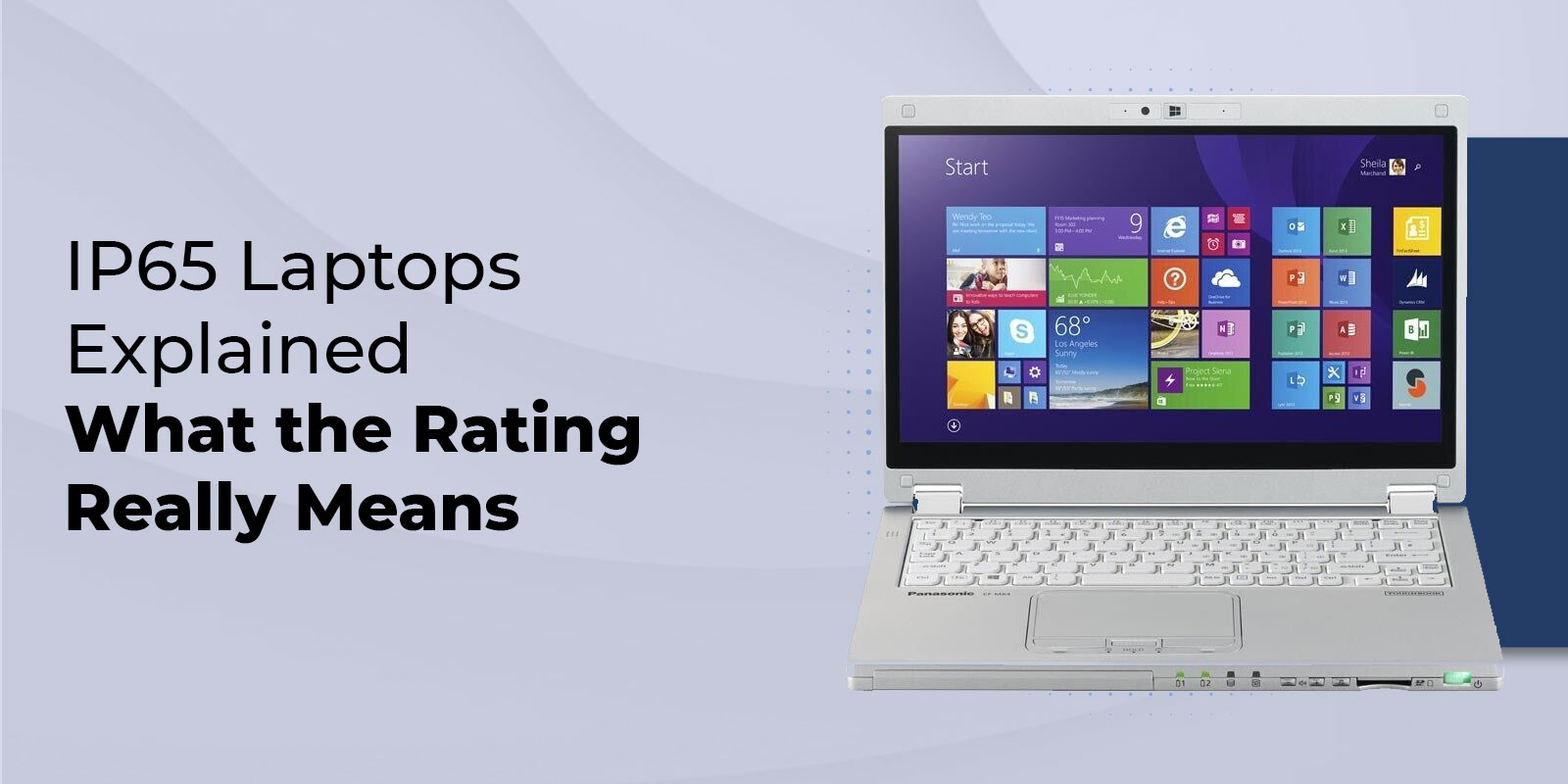
When you see IP65 laptop explained in a spec sheet, it is not just a marketing label. IP65 is a formal ingress protection rating that tells you exactly how well a device resists dust and water. For mobile workers, field technicians, and anyone who depends on a rugged laptop to keep projects moving, those two digits can be the difference between a short interruption and a costly outage. A Grand View Research report estimates the rugged electronics market at $10.3 billion in 2022, with a 6.9% CAGR projected through 2030, showing how many industries now rely on IP65 devices. At the same time, Gartner has reported average IT downtime costs of approximately $5,600–$9,000 per minute, which underscores why reliable ingress protection, sealed ports, and a reinforced chassis are crucial in daily operations.
What Is the IP Rating System?
IP ratings originate from the IEC 60529 standard, created by the International Electrotechnical Commission to classify the resistance of enclosures to solids and liquids. IP denotes “Ingress Protection,” and the digits that follow show protection against dust and against water.
The first digit is between 0 and 6, where 0 indicates no protection and 6 indicates a dust-tight seal. The second digit runs from 0 to 9K, where higher numbers indicate better resistance against water, from light drips to high-pressure, high-temperature jets.
Unlike vague terms such as “weather resistant,” the IEC 60529 system gives a repeatable way to compare devices- for example, IP65 vs IP67 vs IP68. IP67 and IP68 add immersion protection in water, while IP65 focuses on dust protection and resistance to water jets. In North America, you may also see a NEMA rating on some enclosures, which is a different but related system used mainly for industrial cabinets and control boxes.
Breaking Down IP65
IP65 packages two separate test results into one code. The “6” confirms maximum protection against dust ingress, and the “5” shows resistance to low-pressure water jets from any direction. For a rugged laptop user, that means confidence in dusty job sites and during rain or washdown, provided the device is used within its published limits.
Engineers achieve this performance by pairing seals, gaskets, and internal layouts with features such as sealed ports, rubber covers, and a reinforced chassis that resists flexing. Together, these details reduce pathways for dust and water to enter and reach sensitive electronics.
First Digit “6” – Dust Tight
The first digit in an IP65 code is “6,” which is the highest level of solid-particle protection defined in IEC 60529. Dust-tight means no dust can enter the enclosure during the standard test. For laptops, this is crucial in environments such as construction, mining, manufacturing, agriculture, and military field work, where airborne particulates are a constant presence.
In the IP6X test, devices sit in a dust chamber while fine talc is circulated under negative pressure for several hours. After the test, inspectors open the enclosure to confirm there is no dust inside that could interfere with operation or safety.
A rugged laptop built to meet this rating typically combines-
- Gasketed panels that prevent dust from settling into keyboard or hinge gaps
- Sealed ports with locking doors instead of always-exposed connectors
- A reinforced chassis that resists twisting, so seals stay aligned over time
Many laptops that meet IP65 also undergo MIL-STD-810G or MIL-STD-810H tests for shock, vibration, temperature, and humidity, providing buyers with an additional layer of assurance beyond dust-tight performance alone.
Second Digit “5” – Protection Against Low-Pressure Water Jets
The second digit “5” refers to protection from water jets. In the IPX5 test, the device is sprayed with a 6.3 mm nozzle, delivering approximately 12.5 liters per minute of water at a pressure of roughly 30 kPa from a distance of 3 meters, for a set period, from multiple angles. Afterward, the device must function normally, with no harmful water ingress.
For day-to-day use, that translates to reliable operation in heavy rain, hose cleaning, and splash-prone areas such as maintenance bays or factory floors. IP65 does not mean the laptop is rated for submersion, which is where IP67 vs IP65 and IP68 become essential distinctions. IP67 and IP68 specify immersion depth and time, while IP65 prioritizes strong protection against spray and jets.
For most mobile professionals, IP65 strikes a practical balance- strong enough for real-world weather and washdown, without the design compromises or cost that full immersion ratings sometimes require.
How IP65 Laptops Are Tested
IP65 testing focuses on two elements- dust ingress and water jets. For IT teams, these tests connect directly to business outcomes. When each laptop in a fleet is less likely to fail in harsh conditions, the risk of downtime decreases. With Gartner estimating average IT downtime costs between $5,600 and $9,000 per minute, the return on investment in reliable ingress protection becomes clear, especially if even a single rugged laptop prevents an outage during a critical task.
The growth of the rugged electronics sector to $10.3 billion in 2022, with a projected 6.9 percent CAGR through 2030, reflects how industries such as logistics, field service, utilities, and defense are standardizing on devices that combine ingress protection with drop and shock resistance. In many cases, buyers look for both IP65 and MIL-STD-810G or MIL-STD-810H test reports to ensure the device has been tested for resistance to dust, water, vibration, and temperature fluctuations.
Dust Ingress Test (IP6X)
For the dust portion of IP65, the laptop is placed in a sealed chamber filled with fine talcum powder. A vacuum system reduces pressure inside the device enclosure, encouraging dust to enter through any weak point in the design. The test can run for several hours, depending on airflow and chamber design.
To pass IP6X, the device must show no dust inside that might impair operation, cause overheating, or create tracking paths on circuit boards. Designers typically use multi-layer seals around keyboards and trackpads, internal barriers between fans and critical components, and carefully route cables through sealed grommets.
These design choices pair with rugged laptop construction details such as a reinforced chassis to prevent micro-cracks at joints, plus port covers that latch securely and maintain their seal even after repeated opening and closing.
Water Jet Test (IPX5)
For the IPX5 water test, the laptop is mounted on a turntable or a fixed stand and sprayed using a 6.3 mm nozzle that delivers 12.5 L/min of water at approximately 30 kPa from a distance of 3 meters. The spray emanates from all directions for a defined period, typically several minutes per orientation.
To pass, the laptop must keep water from entering in quantities that could interfere with safe operation. That is where sealed ports, gasketed display bezels, and carefully designed hinge assemblies are essential. The keyboard and touchpad must resist water jets without allowing moisture to pool inside the enclosure.
While IP65 does not cover submersion, pairing this rating with clear use guidelines gives teams confidence that routine exposure to water jets, washdowns, and driving rain will not immediately lead to failures. Combined with MIL-STD-810G or MIL-STD-810H testing, an IP65 rating indicates that the laptop is designed for demanding field work, rather than just office use.
Is an IP65 Laptop Waterproof?
An IP65 rating means strong water resistance, not full waterproofing. The “5” in IP65 indicates protection against low-pressure water jets, such as hose spray protection or heavy rain, when all covers are closed. It does not mean the laptop has passed any submersion test.
If an IP65 laptop is accidentally dropped in a puddle or submerged in water, the rating does not guarantee survival. Water ingress can still occur through vents, gaps in the keyboard, or damaged seals. That is why manufacturers clearly state that IP65 covers spray and jets, not immersion.
Think of IP65 outdoor laptops as rain-ready and washdown-friendly, provided you follow their instructions, keep the ports sealed, and avoid submerging the device. For full immersion scenarios, you would need a different IP rating and enclosure design that explicitly addresses standing water and depth.
IP65 vs Other Ratings

The following is a comparison between IP65 and other ratings to help you determine the proper outdoor laptops suitable for your work.
IP65 vs IP67 vs IP68
IP65, IP67, and IP68 all start with the same first digit. The “6” indicates complete dust ingress protection, also known as dust-tight. The difference lies in the second digit.
- IP65 protects water jets from any direction.
- IP67 protects temporary immersion, typically up to 1 meter for a specified period.
- IP68 goes further, covering longer or deeper immersion, as specified by each manufacturer.
If technicians work in rain, washdown areas, or areas with frequent hose spray, an IP65 rating is often sufficient. If the risk involves falling into water, working near docks, or regular exposure to flooded areas, IP67 or IP68 ratings become more suitable. For laptops, IP65 is often chosen as a balance between usability, cooling needs, and realistic field conditions.
IP65 vs IP66 and IP69K
IP66 uses the same dust rating as IP65 but raises the water protection level. The “6” in the second position means resistance to more powerful water jets than IP65. IP69K, originally from an automotive standard, covers high-pressure, high-temperature steam and washdown from close range.
These higher water ratings are commonly found on enclosures in food processing, heavy vehicle, and washdown zones. For portable devices, achieving IP66 or IP69K ratings can be more complex because cooling and usability often require vents, speakers, and ports.
Many industrial laptops combine IP65 with additional mechanical protection and MIL-STD testing. That approach delivers hose spray protection and dust resistance while still allowing for acceptable thermal performance and field use.
IP65 vs NEMA
NEMA ratings originate from the National Electrical Manufacturers Association and are widely used in North America for industrial enclosures, including cabinets. There is no perfect one-to-one match between IP codes and NEMA grades; however, IP65 is roughly equivalent to NEMA 4 in terms of dust ingress and water jets.
For practical purposes, you can consider IP65 laptops suitable for environments where NEMA 4 or similar enclosures protect fixed equipment. The computer itself provides ingress protection for mobile work, while control panels and junction boxes rely on their own NEMA rating. Understanding both systems helps safety managers align portable gear with their existing facility standards.
Key Features Beyond IP65
An IP65 label indicates resistance to dust ingress and water jets, but it does not describe drop resistance, thermal performance, or long-term durability. This is where additional certifications and design choices matter.
Many industrial laptops pair IP65 with MIL-STD-810G or MIL-STD-810H tests for vibration, drop, shock, temperature, and humidity. Inside the chassis, you may find a shock-mounted drive, reinforced corners, and bracing that helps resist bending or twisting.
Sealed ports limit water ingress and keep dust away from connectors, while a reinforced chassis maintains seal integrity over years of opening, carrying, and docking. For outdoor work, a sunlight-readable display enables crews to see the screen clearly, and glove-touch capability allows them to operate the device without removing their work gloves.
Taken together, IP65 plus MIL-STD tests, shock protection, and usability features create a device that exceeds the requirements of a simple lab test. It becomes a reliable part of daily field service technology, even in punishing environments.
Industries and Use Cases
IP65-rated industrial laptops are prevalent in various sectors where downtime compromises safety and productivity.
In field service and utilities, technicians use IP65 devices to access schematics, GIS data, and work orders at substations, wind farms, cell towers, and underground vaults. Dust, rain, and hose spray are part of routine work, so ingress protection is essential.
On construction and engineering sites, an IP65-rated construction laptop withstands dust, concrete fines, and sudden showers. Project managers and surveyors can carry one machine between office trailers, muddy trenches, and crane cabs without constantly worrying about the weather.
Public safety computing also benefits. Police, fire, and EMS teams rely on laptops for dispatch data, mapping, and reports. Devices are exposed to rain, vehicle vibrations, and frequent handling. IP65 reduces the risk that a wet incident or dusty roadside scene will take a unit out of service.
Military-grade laptops with IP65 ratings and MIL-STD-810G or MIL-STD-810H testing standards serve in logistics, maintenance, and command roles. Warehousing, manufacturing, and yard operations use outdoor laptops on forklifts and carts where airborne dust, loading dock rain, and accidental splashes are routine.
Maintaining and Understanding Limitations

Even the strongest IP65 design depends on proper care. Over time, seals and gaskets can dry out, crack, or compress. Regular gasket maintenance and visual inspection are essential. Check port covers for damage, make sure they latch fully, and keep debris away from sealing surfaces.
Remember that IP65 is about dust-tight performance and protection from low-pressure water jets, not immersion or high-pressure washers. Avoid high-pressure cleaners, steam, or hot industrial washdowns unless the device is rated explicitly for IP66 or IP69K. Do not perform any form of improvised submersion test on the laptop.
If the device is exposed to heavy contamination, gently rinse it with a controlled hose spray protection while all ports are closed, then dry it thoroughly. Open port covers only after the exterior is clean and dry, ensuring that water ingress does not occur through USB, Ethernet, or power connectors.
Routine checks, careful cleaning, and adherence to manufacturer guidelines help preserve the original IP65 performance throughout the device's lifespan.
Recommended IP65 Rugged Laptops
When selecting IP65 rugged laptops, consider how and where they will be used. List your main hazards, such as dust, rain, vibration, and drops. Then, confirm compliance with IP65, MIL-STD-810G, or MIL-STD-810H, and specify key usability features, including a sunlight-readable display and glove-touch support.
Many organizations standardize on well-established families such as Panasonic Toughbook because they combine IP65 ratings, military test reports, and options for vehicle docks, office docks, and barcode readers. Within such a lineup, you will typically find-
- A full-size clamshell notebook suited for office plus field work
- A 2 device that shifts between tablet and laptop modes for inspections
- A vehicle-mountable unit that lives in trucks, patrol cars, or service vans
Across these choices, look for a shock-mounted drive or solid-state storage, sealed ports, reinforced chassis construction, and battery options that match your shift patterns. With that checklist, an IP65-rated Panasonic Toughbook or comparable device becomes a reliable partner for field service technology, construction sites, public safety computing, and many other demanding applications.
Frequently Asked Questions
1. Is IP65 considered waterproof?
No. An IP65 device is water-resistant, not fully waterproof. It is designed to withstand low-pressure water jets and heavy splashes from any direction when all covers are closed. It has not passed a submersion test, so for immersion, you should look for an IP67 or IP68 rating instead.
2. What happens if IP65 gets wet?
Under normal IPX5 conditions, such as rain, splashes, or controlled hose spray, an IP65 device should continue working without harmful water ingress. However, if it is submerged, exposed to high-pressure or steam jets, or used with damaged seals or open ports, water can breach the enclosure and cause the system to fail.
3. Which one is better, IP65 or IP67?
“Better” depends on how you use the device. IP65 is ideal for environments with dust, rain, and hose spray, where equipment is unlikely to be submerged. IP67 provides temporary submersion protection, making it a better fit for use near water, docks, puddles, or shallow pools.
4. Is IP65 ok in rain?
Yes. IP65 is suitable for standard and heavy rainfall, provided all port covers are closed and gaskets are intact. The IPX5 part of the rating covers low-pressure water jets, which create more force than typical rain. It is not intended for use with power washers or prolonged immersion.
5. What are the limitations of IP65?
IP65 does not cover submersion, high-pressure jets, or steam cleaning. It also assumes seals and gaskets are in good condition. Over time, heat, chemicals, or physical wear can cause gaskets to degrade. Without regular inspection and cleaning, the original protection level may decline, and water or dust can enter.
6. What is the IP rating for 100% waterproof products?
No IP rating guarantees permanent, absolute waterproofing in every situation. IP68 offers the highest level of continuous immersion protection, as defined in IEC 60529, but only under the specified depth and time limits set by the manufacturer. Exceeding those conditions or damaging the housing can still allow water inside.