Rugged Laptops Built for Extreme Conditions
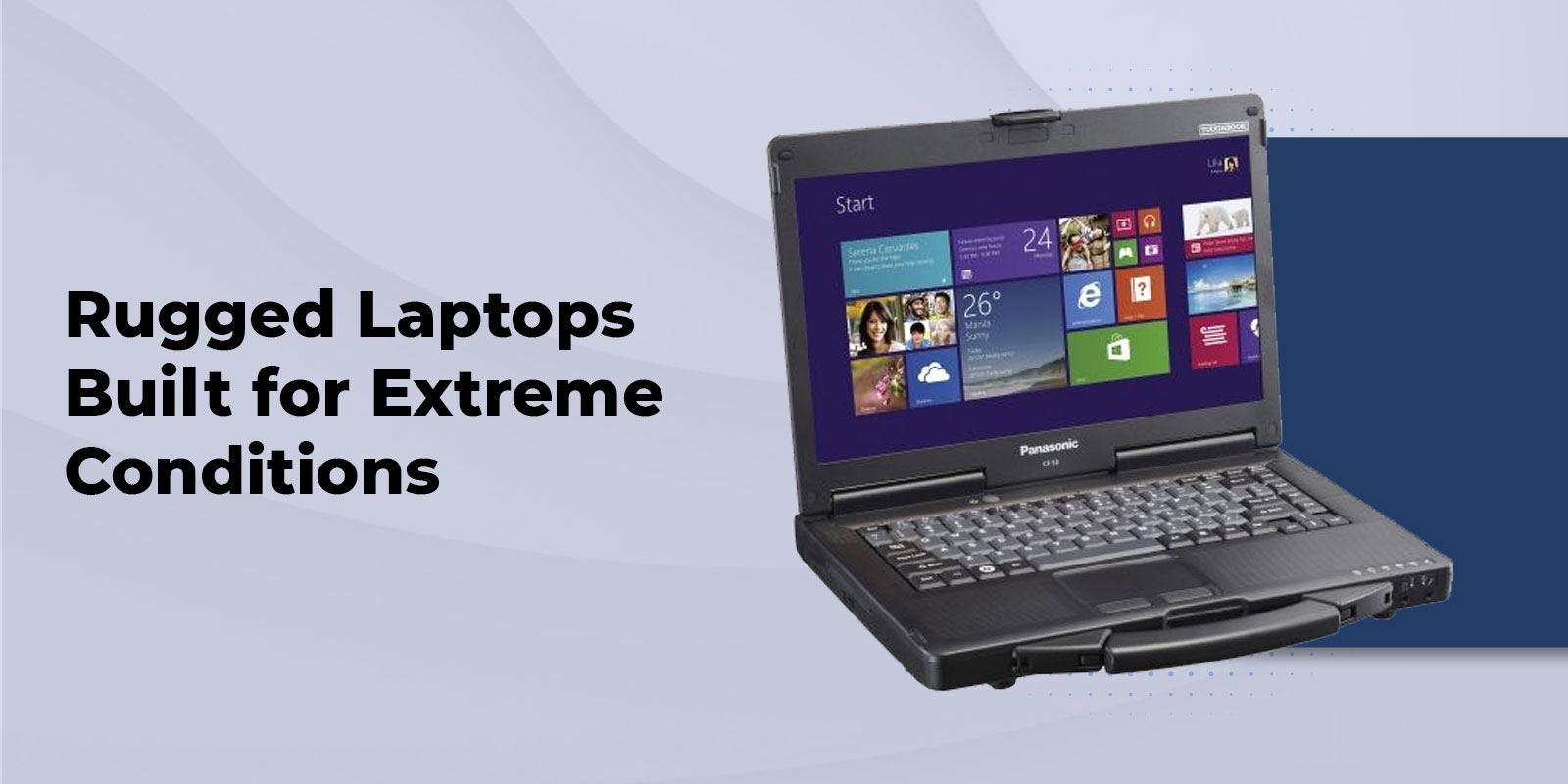
Your laptop isn’t built for the environments you work in and that’s where the problem starts.
From construction sites and factory floors to emergency response and field operations, standard laptops simply aren’t designed to handle drops, dust, vibration, or extreme weather. But choosing a rugged laptop isn’t as straightforward as it sounds. Not all rugged devices offer the same level of protection, and the difference between semi-rugged and fully rugged can determine whether your investment performs reliably or fails when it matters most.
Below, we’ll break down what rugged laptops actually are, how durability standards like MIL-STD-810 and IP ratings work, and the key differences between semi-rugged and fully rugged models. We’ll help you to choose the right type of rugged laptop so you get the performance, protection, and long-term value your work demands.
Key Highlights
- Fully rugged laptops are built for direct exposure (rain, dust, drops, vibration)
- Semi-rugged laptops are best for mixed environments (office + light field use)
- Most rugged laptops use SSD storage, making them more shock-resistant than HDD-based systems
- Modern rugged laptops offer comparable performance to business-class laptops
- Hot-swappable batteries enable continuous operation in the field
- Rugged laptops are modular and serviceable, reducing downtime and replacement costs
- Higher upfront cost, but lower total cost of ownership (TCO) over time
- Always verify which MIL-STD test methods were performed, not just the claim
- Choose based on your worst-case environment, not your average use
What Are Rugged Laptops?
A rugged laptop is a purpose-built, industrial-grade computer engineered to operate reliably in environments where standard consumer devices fail. Unlike typical office laptops, rugged laptops are designed and validated against MIL-STD-810G/H test methods and often paired with IP-rated sealing to withstand real-world hazards.
These devices are tested for resistance to drops (typically 4–6 feet depending on classification), extreme temperatures (as low as -20°F / -29°C and up to 140°F / 60°C), vibration, humidity, altitude, dust, and water exposure. Fully rugged models commonly achieve IP65 or IP66 ratings, ensuring protection against dust ingress and water jets.
The key difference lies in engineering philosophy. Rugged laptops prioritize durability, reliability, and serviceability over thinness or cost optimization. Components are reinforced at every level:
- Magnesium alloy or reinforced composite chassis
- Shock-mounted SSD storage (not HDDs)
- Sealed I/O ports with protective covers
- Reinforced hinges and sunlight-readable displays
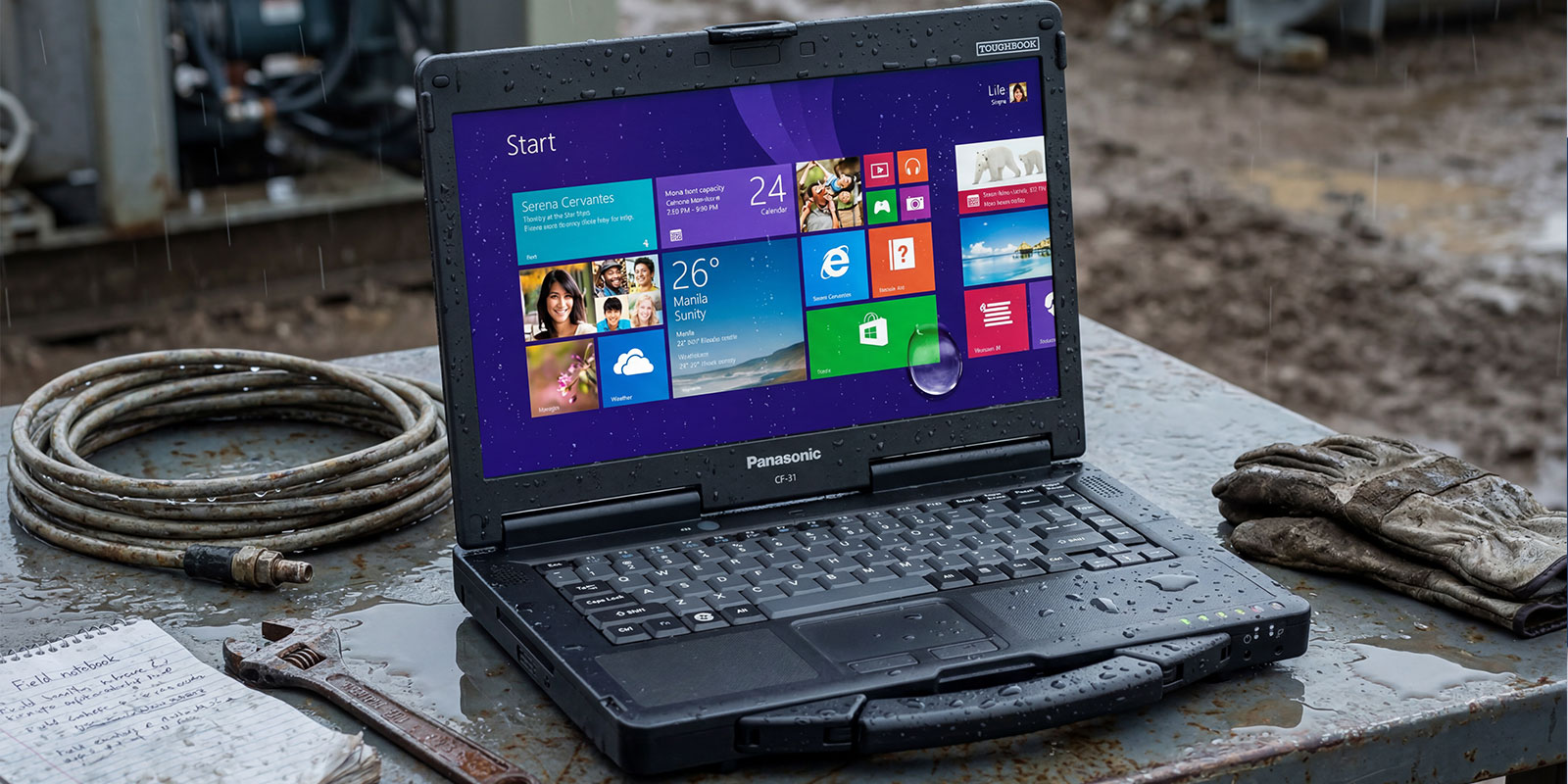
For example, the Panasonic Toughbook CF-31 is built with a fully sealed chassis and IP65-rated protection, allowing it to function in heavy rain, dust storms, and high-impact environments where consumer laptops would fail immediately.
Industries requiring rugged laptops for construction, law enforcement mobile computing, military operations, utilities, field service, and manufacturing depend on rugged laptops because device failure directly impacts safety, uptime, and operational continuity. While the upfront cost is higher, rugged devices often replace multiple consumer laptops over their lifecycle, delivering a significantly lower total cost of ownership (TCO).
How to Choose the Right Rugged Laptop: Semi-Rugged vs Fully Rugged
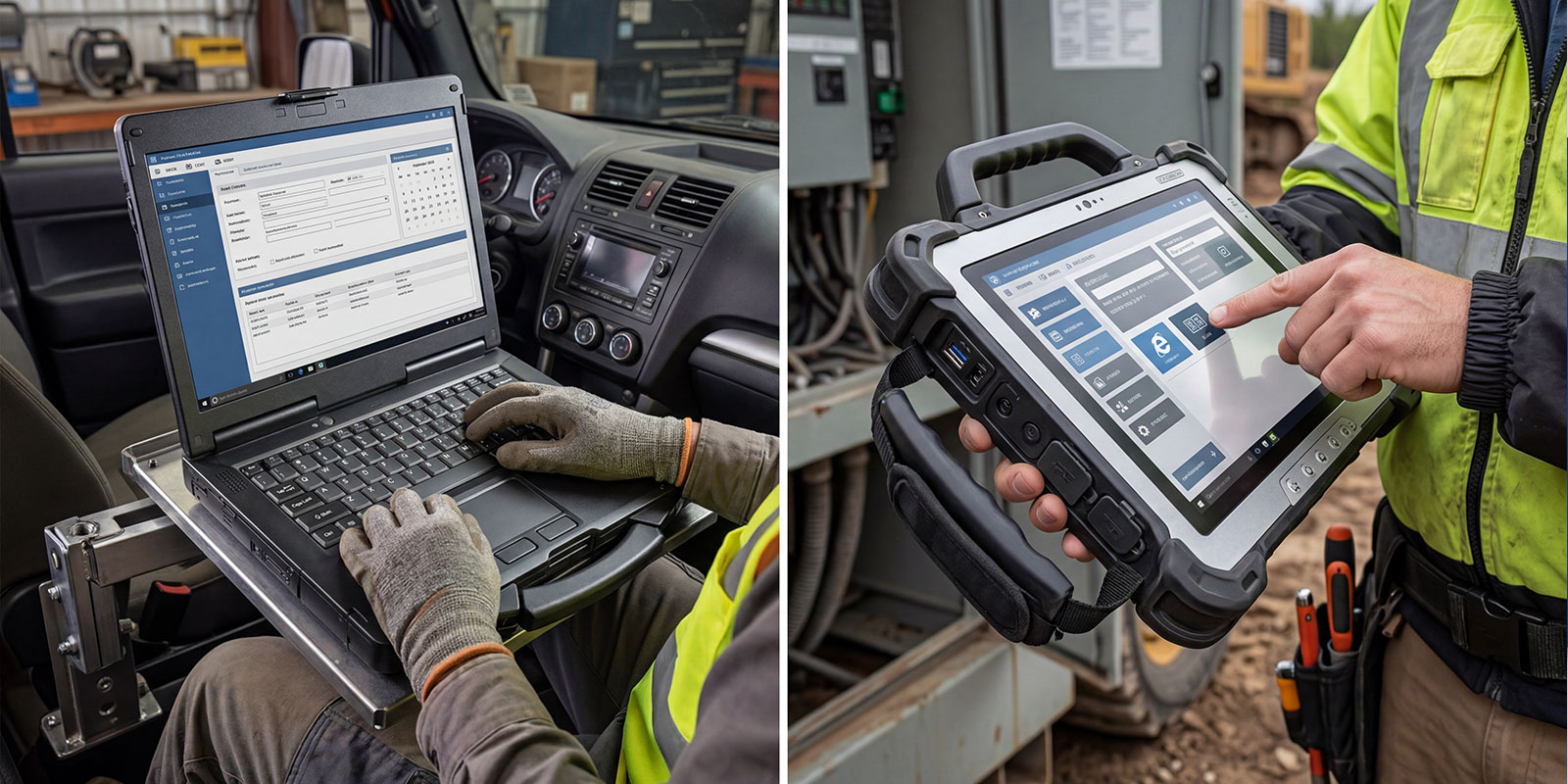
Choosing between semi-rugged and fully rugged laptops is the most critical purchasing decision. This is not a marketing distinction; it directly determines whether your device will survive your working conditions.
Key Differences
|
Feature |
Semi-Rugged Laptops |
Fully Rugged Laptops |
|
Drop Protection |
3–4 ft (desk/vehicle height) |
Up to 6 ft (repeated drops) |
|
Water/Dust Resistance |
Spill-resistant, partial sealing |
IP65/IP66 fully sealed |
|
Operating Temperature |
~14°F to 140°F (-10°C to 60°C) |
-20°F to 145°F (-29°C to 63°C) |
|
Weight |
~4.5–5.5 lbs |
~7–8.5 lbs |
|
Use Case |
Mixed indoor/outdoor, vehicles, site offices |
Extreme outdoor, heavy industry, emergency response |
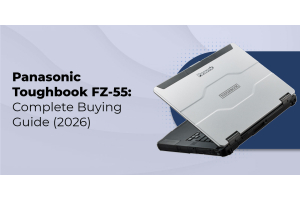
Semi-rugged laptops like the Panasonic Toughbook FZ-55 are optimized for professionals who split time between office environments and moderate field conditions. They offer durability improvements without the full weight and sealing of rugged systems.
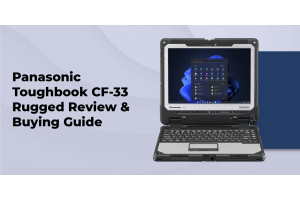
Fully rugged laptops such as the Toughbook 40 or legacy CF-31 are designed for continuous exposure to harsh environments. These systems are fully sealed, drop-tested at standing height, and built for rain, dust, and vibration-intensive use.
Decision rule: If your laptop may be exposed to direct rain, heavy dust, or repeated drops onto concrete, fully rugged is not optional; it’s required.
Understanding MIL-STD-810 Certification and IP Ratings
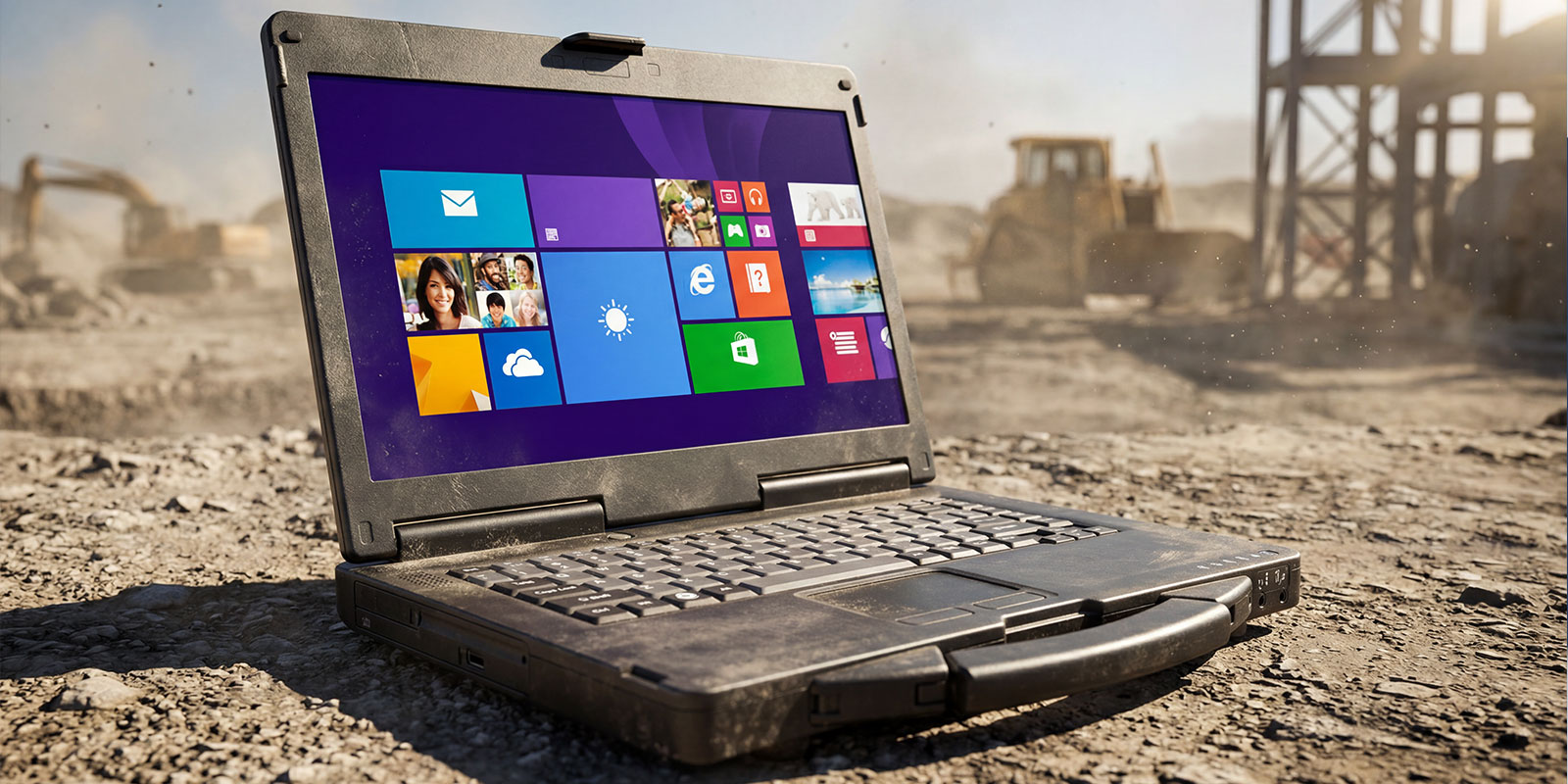
MIL-STD-810 is a U.S. Department of Defense testing standard, not a certification. This distinction matters.
When a rugged laptop carries MIL-STD-810G or 810H certification, it has successfully passed rigorous testing across 29 distinct test methods including low pressure (altitude), high/low temperature extremes, temperature shock, contamination by fluids, solar radiation, rain, humidity, fungus, salt fog, dust, sand, explosive atmosphere, leakage, acceleration, shock, and vibration.
Manufacturers can claim compliance by testing against selected methods, not the entire standard. The framework includes nearly 30 environmental test methods, such as:
- Temperature extremes and thermal shock
- Rain, humidity, and fluid contamination
- Dust, sand, and salt fog
- Shock, vibration, and acceleration
- Altitude and pressure
This means two laptops labeled “MIL-STD-810H compliant” may have passed completely different test scopes. Genuine MIL-STD-810 certified laptops like Panasonic Toughbooks undergo comprehensive testing across all relevant methods for their intended use case, with third-party verification providing accountability absent from self-certification.
IP Ratings Explained
Ingress Protection (IP) ratings define resistance to solids and liquids:
- First digit (0–6): Dust protection
- Second digit (0–9): Water protection
Examples:
- IP65 → Dust-tight + water jets
- IP66 → Dust-tight + powerful water jets
Important clarification:
- IP65/IP66 = water-resistant, not waterproof
- Submersion requires IP67/IP68 (rare in laptops)
For most industrial use cases, IP65/IP66 is the practical benchmark for full rugged reliability.
FAQs
1. What makes a laptop truly rugged?
Rugged laptops are engineered at the structural level with reinforced materials, sealed designs, and validated durability testing. A consumer laptop with a protective case cannot replicate internal shock protection or environmental sealing.
2. Are rugged laptops waterproof?
Most fully rugged laptops achieve IP65/IP66 ratings, making them highly water-resistant and able to survive rain, splashes, and direct water jets. They are not submersible like IP67/IP68 devices. Semi-rugged models offer spill-resistant keyboards but lack complete port sealing. For underwater operation, specialized sealed laptops exist but represent niche applications.
3. Can rugged laptops be repaired?
Yes. A major advantage is modular design. Batteries, SSDs, RAM, and keyboards can be replaced in the field, extending lifespan and reducing downtime.
4. Are rugged laptops slower than consumer laptops?
No. Modern rugged laptops use current-generation Intel Core processors, NVMe SSDs, and high RAM capacities. Performance is comparable to business-class laptops, the premium is for durability, not reduced performance.
5. Do I need fully rugged for construction work?
It depends on your specific environment. Construction laptops used primarily in site trailers, vehicles, or covered areas perform well with semi-rugged specifications like the FZ-55. Direct exposure to rain, heavy dust, or operation in uncovered outdoor environments requires fully rugged protection like the CF-31. Consider your worst-case scenario, if the laptop might be used in direct rain or dropped from standing height onto concrete, choose fully rugged.
6. Panasonic vs Getac: which is better?
Both Panasonic Toughbook and Getac devices deliver enterprise-grade rugged performance.
- Panasonic: Strong presence in government, military, law enforcement
- Getac: Competitive pricing, strong industrial and utilities adoption
The right choice depends on ecosystem compatibility, deployment scale, and feature requirements.
7. How long does battery last in the field?
Typical runtime is 8–12 hours, with many models supporting hot-swappable batteries. With spare batteries, continuous operation is achievable.
8. Can rugged laptops be mounted in vehicles?
Yes. They are widely used with professional mounts from Gamber-Johnson, Havis, and RAM Mounts, offering:
- Vibration damping
- Integrated charging
- Docking and port replication
Ready to Find Your Rugged Laptop?
Browse our complete selection of new rugged laptops and certified refurbished models below, or contact our rugged computing specialists for personalized recommendations based on your specific application and environment.